

A312 Parkway junction with Cranford High Street
The consultation period has now closed. You can find updates on the proposals in the 'Latest news' section.
Proposals
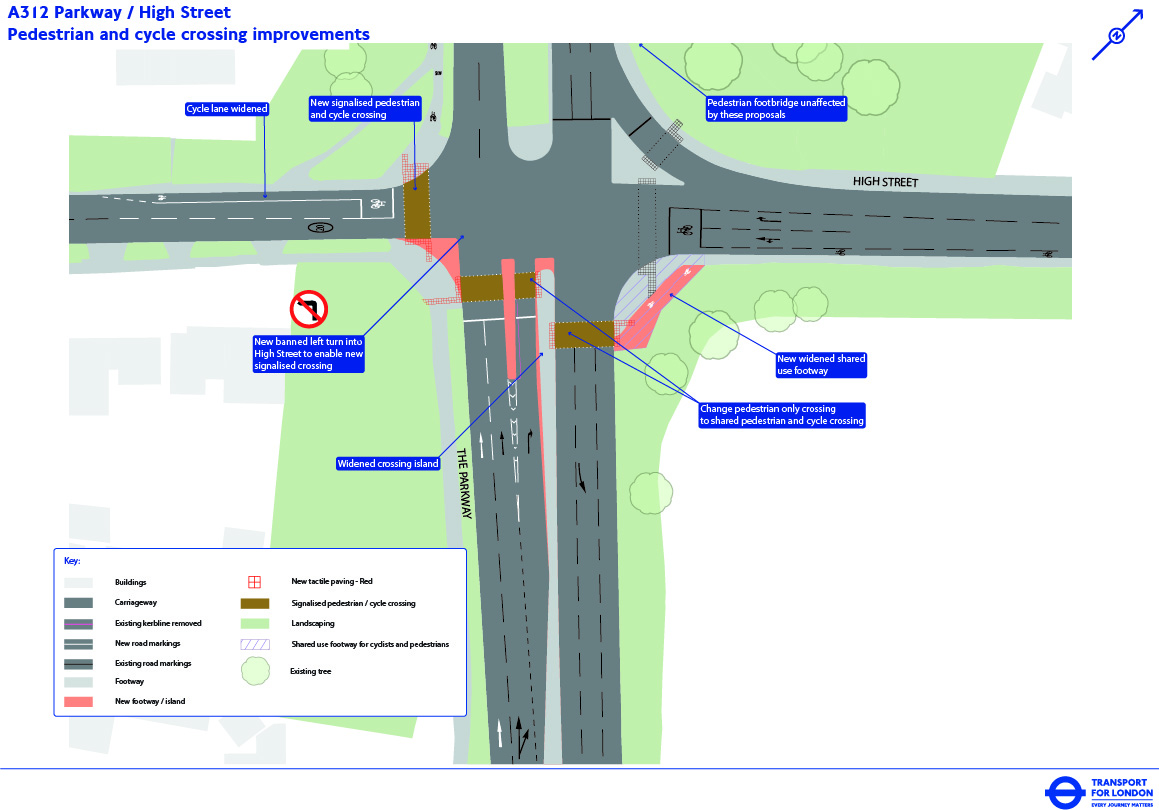
We plan to upgrade the junction of the A312 Parkway with Cranford High Street to make it easier for people walking and cycling to use. The improvements we propose are:
- A new push-button ‘Toucan’ crossing would be installed on the western side of Cranford High Street. Toucan crossings can be used by both cyclists and pedestrians
- Widening the existing crossing on the southern arm of the junction from 2.8 metres to 4 metres, making it easier to use
- Prohibiting the left turn from Parkway into Cranford High Street so we can introduce a new pedestrian crossing on the western side of Cranford High Street and create extra footway space at the south-west corner for pedestrians and cyclists
- Removing guardrails at the existing crossing points to create a more open environment and improve access for wheelchair users, pushchairs, and cyclists
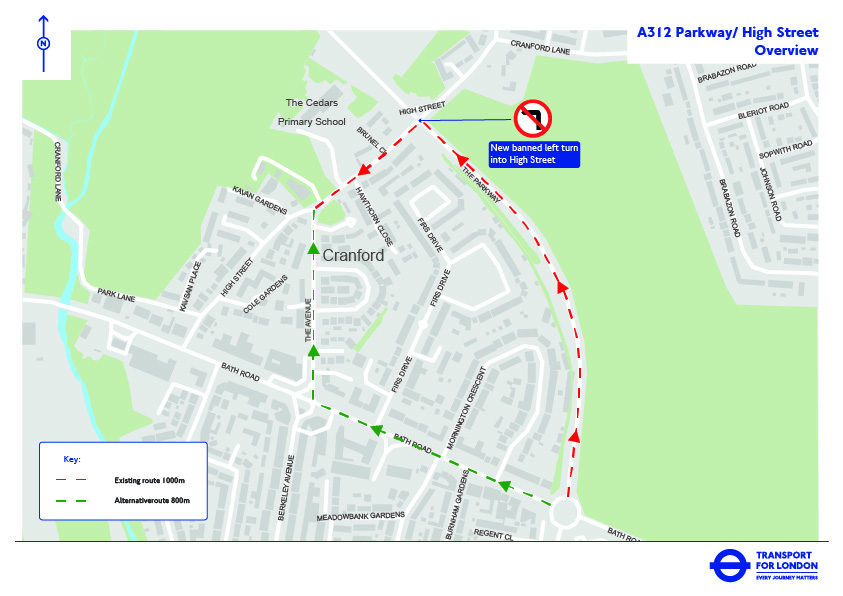
Vehicles affected by the turn ban will still be able to reach Cranford High Street via Bath Road or The Avenue, and traffic modelling suggests the impact on overall flow will be minimal. Bus routes 105 and 111 will continue to operate through the junction without changes.
Why?
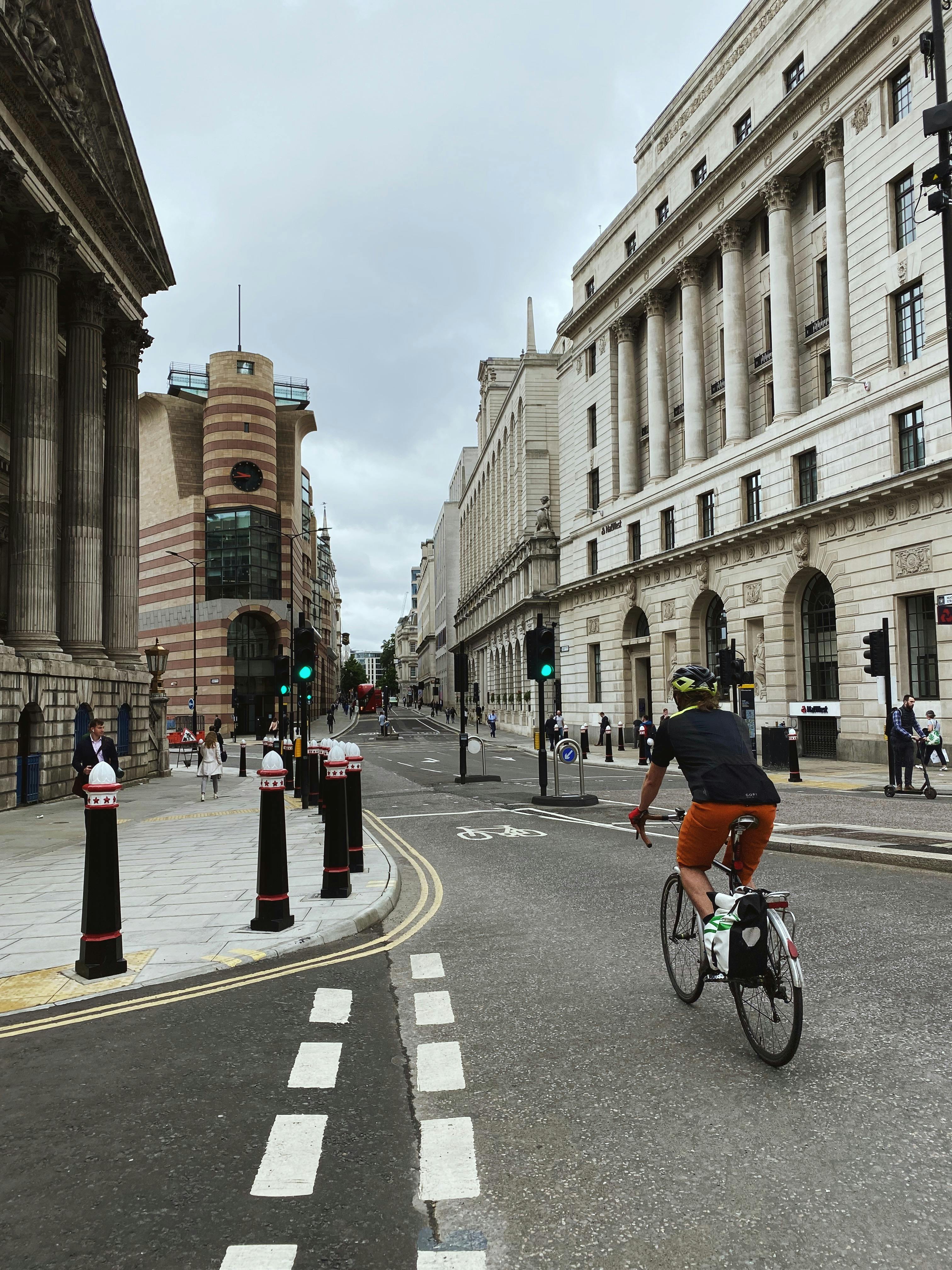
We want London’s streets to be safe, healthy, and welcoming for everyone. The Mayor’s Transport Strategy sets out a clear vision to reduce reliance on cars, encourage walking and cycling, and make our roads safer for all users. A key part of this is Vision Zero, which aims to eliminate all deaths and serious injuries on London’s transport network.
This scheme is being proposed to make the junction of A312 Parkway and Cranford High Street easier to use and more accessible for people walking and cycling. The improvements would also connect pedestrians and cyclists from this junction to the wider A312, creating safer and more direct journeys between local communities and Heathrow.
How it impacts you
The scheme would bring long-term benefits but may cause some short-term disruption during construction, including diversions and longer walking routes. TfL will apply Temporary Traffic Management and clear signage, including translated signs if needed, and provide advance notice via letters and online updates. Here’s what to expect:
For pedestrians
Pedestrians would benefit from a new crossing and more space at the junction. Removing guardrails and adding new footway would improve accessibility for wheelchair users, parents with pushchairs, and those with mobility needs.
For cyclists
Cyclists would also benefit from a new crossing and more space at the junction.
For bus passengers and general traffic
Routes 105 and 111 would continue to operate through the junction without permanent changes, though there may be temporary diversions during construction.
The left turn from Parkway into Cranford High Street would be prohibited. Drivers could still access Cranford High Street via Bath Road to the south, and our traffic modelling shows that the impact on journey times would be minimal.
We’ve completed an Equality Impact Assessment (EqIA) to determine what affect our proposals would have on people with ‘protected characteristics’, and a Healthy Streets check to show the extent to which our proposals align with our Healthy Streets ethos. For further details, please click the ‘More information’ tab.
More information
We will be holding two drop-in events:
- Monday 23 February 2025, (14:00 - 18:00) Meadowbank Community Hub and Library, Community Close, Cranford TW5 9QX
- Saturday 28 February 2025, (12:00 - 16:00) Meadowbank Community Hub and Library, Community Close, Cranford TW5 9QX
This will give you an opportunity to get further information about the proposals and provide your thoughts and feedback, to allow us to consider your views.
You can click on Questions button above for more ways to get in touch and ask us a question.
We have also provided more information to help you respond and a set of Frequently Asked Questions:
Accessible information
We want to make sure everyone is able to take part in our consultations. To help make it accessible to everyone we have provided:
You can translate the information on this page into another language by using the ‘Select language’ button at the bottom of the page
Connecting with London's deaf community on our consultations
To further enhance how we consult with London's deaf community we offer:
- British Sign Language (BSL) videos of our proposals and survey
- A BSL conversation service. This allows the TfL consultation lead to have a two-way BSL translated discussion with a BSL user. To request a BSL conversation please contact us at haveyoursay@tfl.gov.uk and we will be in contact to arrange a convenient time
Tell us your views
You can reply by completing our survey, which should take no more than 10 minutes to complete or if you are short on time, you can submit a quick response.
 |  |
The closing date for comments is 17 March 2026.
Questions?
You can use our question tool during the consultation period. We will respond to your questions as soon as we can.
We’re also holding drop‑in events where you can speak to the team and ask any questions about the proposals:
- Monday 23 February 2025, (14:00 - 18:00) Meadowbank Community Hub and Library, Community Close, Cranford TW5 9QX
- Saturday 28 February 2025, (12:00 - 16:00) Meadowbank Community Hub and Library, Community Close, Cranford TW5 9QX
This will give you an opportunity to get further information about the proposals and provide your thoughts and feedback, to allow us to consider your views.
You can also contact us by email, via our telephone call back service (020 3054 6037) or in writing (FREEPOST TFL HAVE YOUR SAY).
Latest news
Update 18 March 2026
This consultation has now closed. Thank you to everyone who responded. We are analysing your feedback and will report back shortly.
The report will be available to everyone that takes part in the consultation and a copy will be published on our website.
- update ends -


