

Delivering materials and removing waste during construction
The purpose of this page is to give more information about the options and opportunities for transporting goods and materials to and from worksites during construction.
Building the new railway would involve moving large amounts of material, including excavated material, tunnel segments, concrete and steel to and from the site. We are looking at different ways to move these materials during construction, which could involve road, river or rail-based options or a combination of them, with the aim of reducing environmental impacts wherever possible.
Road-based transport will always be needed, as many construction materials (e.g. contaminated soil), cannot be delivered by river or rail, but we are exploring opportunities to use the River Thames and other existing transport infrastructure.
Using the road network for all construction transport
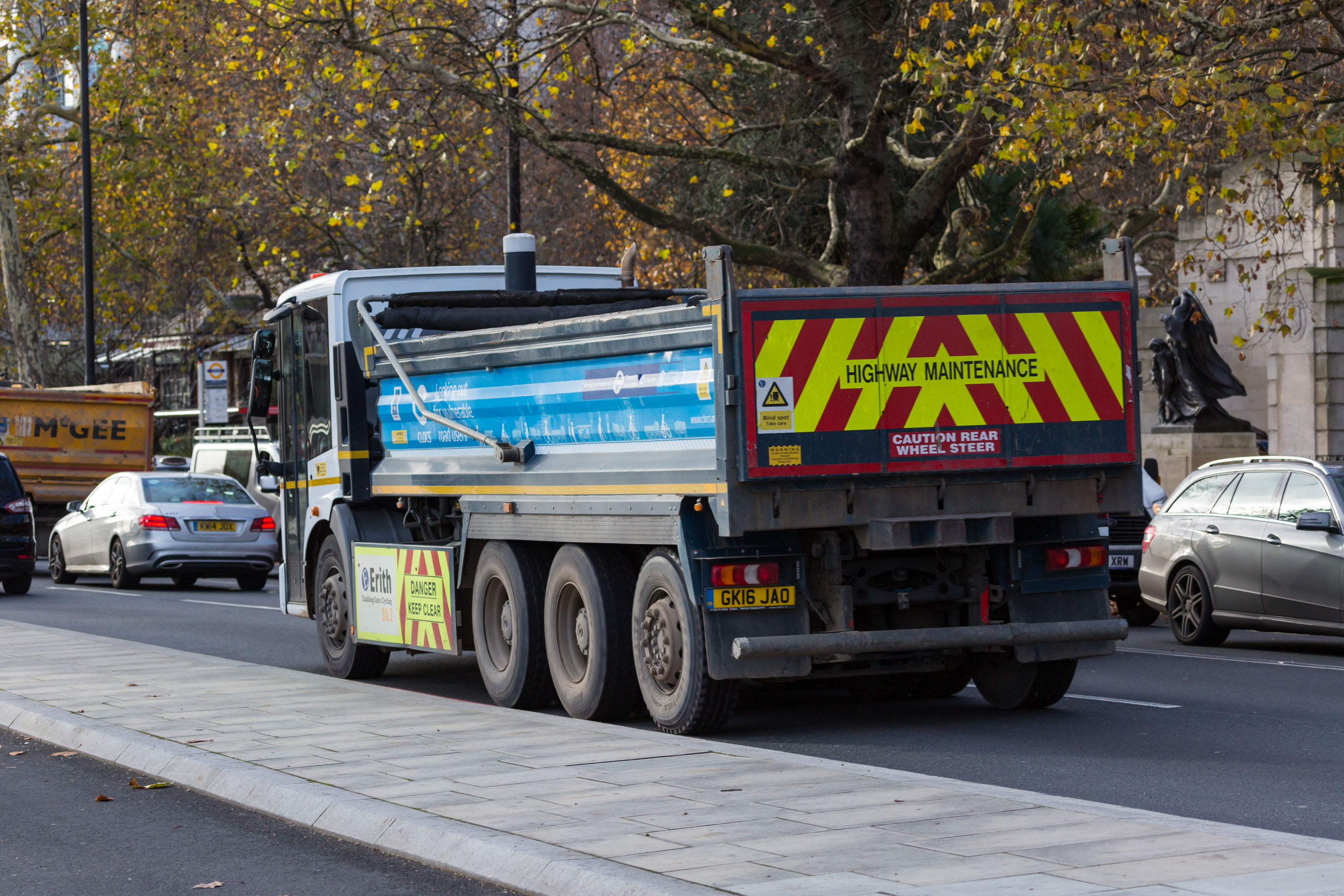 Example HGV
Using the road network for transporting all materials and waste during construction would be the most reliable and flexible strategy, and suitable for all sites. We know however that this approach would result in the highest number of vehicle movements, notably Heavy Goods Vehicles (HGVs).
We have done a high-level assessment of how many HGVs may be needed across the Beckton Riverside and Thamesmead worksites, with these figures presented as average daily two-way movements, based on a five-day working week. These numbers are indicative and do not reflect a finalised construction strategy. The final strategy would take into account TfL and London-wide policies on sustainable mode use during construction.
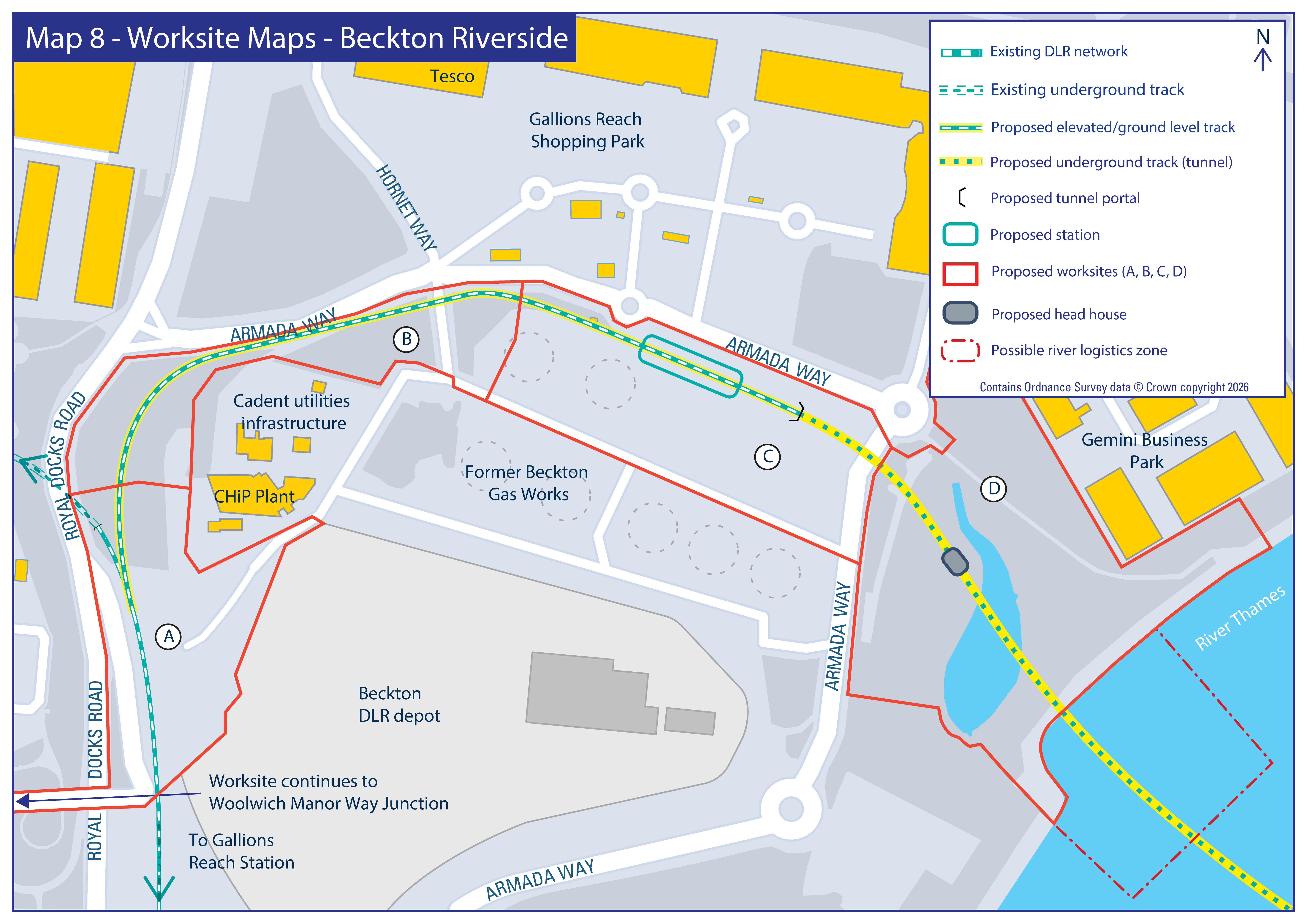 (Click on map for a larger version)
At Beckton Riverside (Worksites A-D shown in the map above):
- Daily average daily two‑way HGV movements would be expected to range between 60 and 90 per day for much of the tunnelling programme
- During the main tunnel boring machine excavation period, average daily HGV movements would typically increase to around 90 to 120 movements per day, driven by spoil removal and associated tunnelling logistics at Worksite D. The highest average daily movements, of up to around 140 movements per day, would be limited to a very small number of individual months, coinciding with peak spoil removal
- Outside the main tunnelling phase, daily movements would be expected to be much lower, typically between 15–40 movements per day, and would gradually reduce below this range as major construction activities are completed
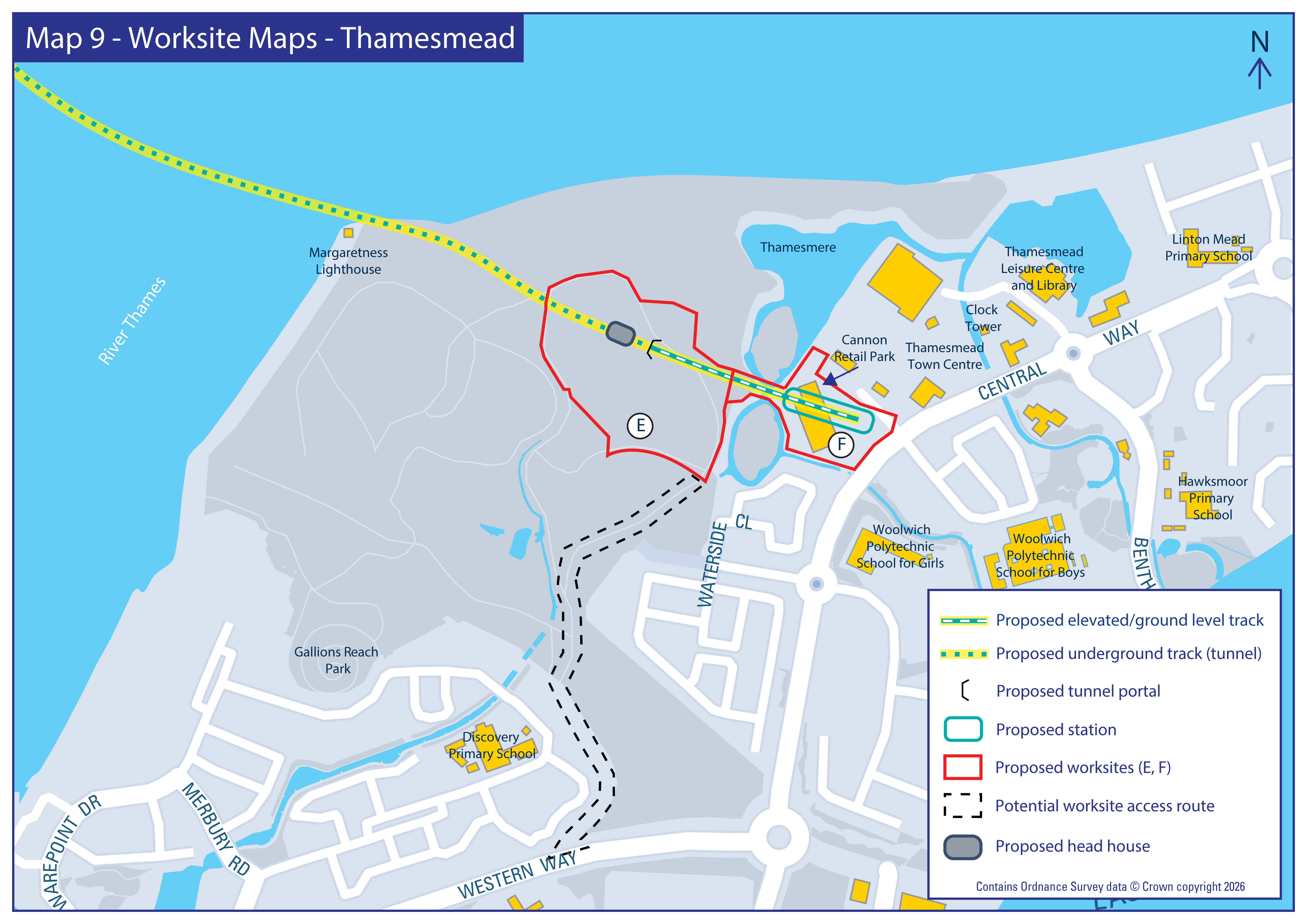 (Click on map for a larger version)
At Thamesmead (Worksites E and F shown in the map above):
- Overall HGV movements would be lower
- Most activity would be focused around Worksite E, where the tunnel reception shaft and associated cut‑and‑cover structures would be built
- During the busiest months, Thamesmead could experience around 10-40 movements per day, with higher levels of 50-70 movements per day occurring for short periods when excavation activity for the reception shaft is at its peak
- For much of the programme, daily movements are expected to be significantly lower, typically between five and 15 per day, reducing further below this range as construction moves into station fit‑out and finishing works
These HGV numbers focus on the largest and most predictable vehicle movements, such as:
- Excavated material
- Tunnel segments
- Major construction materials
They do not include all construction‑related traffic, such as:
- Utilities and highway diversions
- Site set‑up works
- Smaller deliveries
- Removal of general construction waste
- Workforce travel
We recognise both the environmental and the disruptive impact of HGVs on the road network, so we are continuing to look for opportunities to reduce the number of vehicle movements where possible.
Opportunities to reduce road transport
Using the River Thames
In some cases, excavated materials could be transported by barge along the River Thames to reduce HGV movements on local roads. This could be achieved either through the construction of a new pier or jetty or through the use of existing wharfs, docks or jetties along the River Thames in east London. Road transport would still be required to some extent at all sites.
Building a temporary jetty
A temporary jetty, or similar, could be built at Beckton Riverside. This could significantly reduce HGV movements and local road traffic as any excavated materials not reused in the local area could be loaded onto barges for removal by river locally. However, it would also require:
- Temporary structures in the river to form the temporary jetty causing disruption to the marine environment
- Careful assessment of environmental and navigational impacts
- Approvals from the Port of London Authority, the Environment Agency and the Marine Management Organisation
Any new river arrangements would be designed to support construction activities in the first instance, with any more permanent uses subject to further assessment.
Using existing river facilities
Instead of building new river structures, we are also looking at the opportunity to transport excavated materials by HGV to existing wharves, docks or jetties along the River Thames in east London, to then transfer onto barges. This approach could reduce overall HGV journey distances while avoiding the need for disruptive construction in the River Thames. However, it would require:
- The identification of suitable wharfs, docks or jetties locally that had available capacity
- Some HGV journeys to transport the spoil from site to the identified river facility
Using existing rail facilities
There is also potential to use rail freight, subject to further assessment of available facilities, capacity on the network and environmental impact. Some road transport would still be required to move materials to these facilities.
Ongoing assessment
Whilst we continue to explore potential opportunities to use sustainable transport modes during the construction phase, some level of road access would still be essential because many construction materials and equipment cannot be transported by barge and would still need to arrive by HGV.
We are continuing to assess construction transport by:
- Balancing environmental impacts, traffic effects and deliverability
- Working closely with the Port of London Authority, Network Rail and others
- Learning from similar projects such as the Northern line extension, Silvertown Tunnel, Thames Tideway Tunnel and HS2
We are also assessing potential sites that we could send excavated materials to. These are the locations where material would ultimately be reused, restored or otherwise managed. Preference would be given to sites that are relatively local and offer positive environmental outcomes, such as habitat creation or land restoration. The suitability and location of these sites play an important role in determining the most appropriate way to remove materials from our worksites.
Our approach to construction transport would be finalised before works start on site.
Consultation has concluded


