Extending the DLR to Beckton Riverside and Thamesmead
Consultation has concluded
Between 5 June and 16 July 2026, we consulted on proposals to extend the DLR from Gallions Reach to Beckton Riverside and Thamesmead as part of ongoing work to develop the scheme.
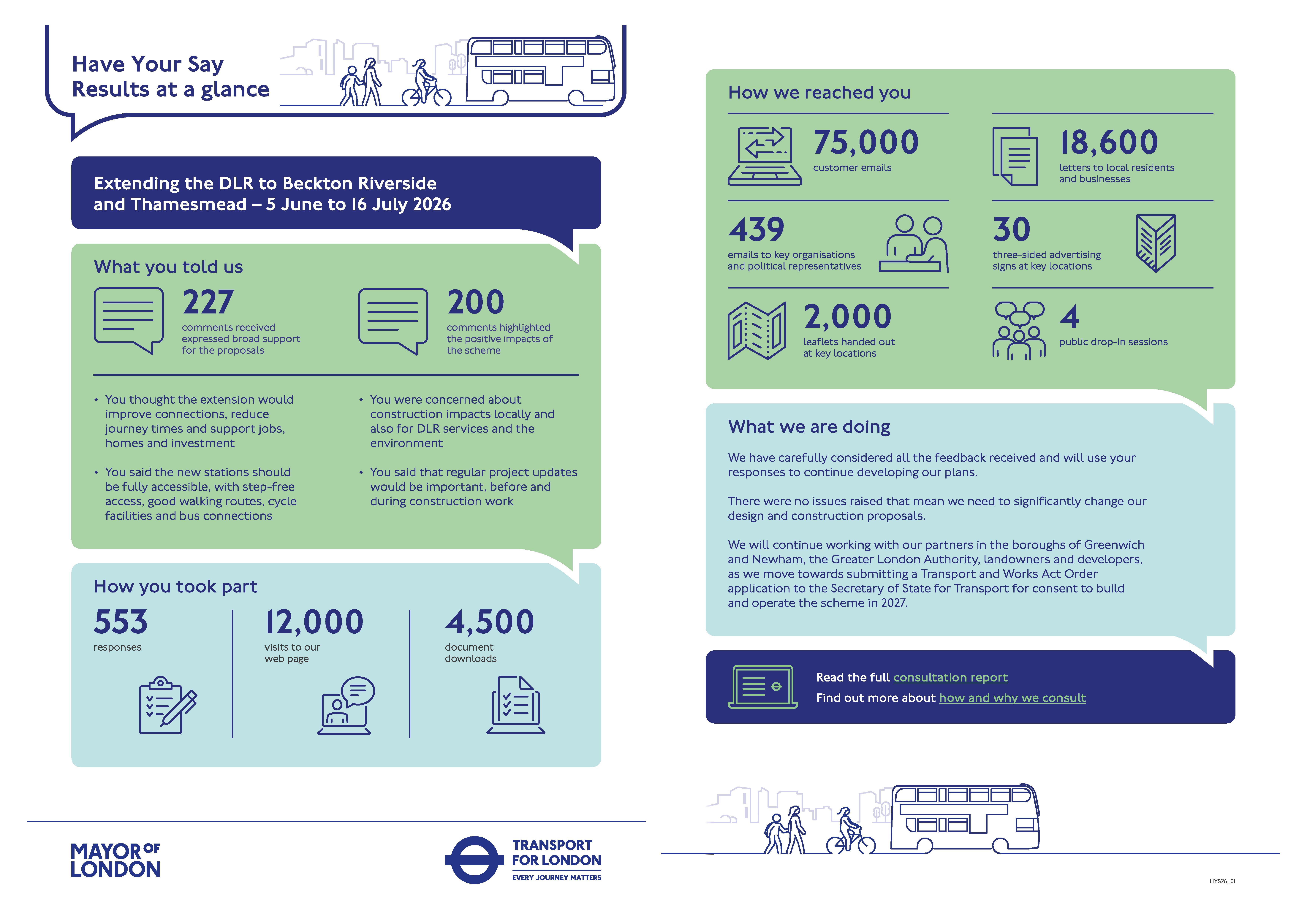 Results at a glance
We have now published our report on the outcomes of consultation and our responses to issues raised. You can also view a summary of the consultation results at a glance as above and view the ‘Latest news’ for more details.
Background and design so far
In this section we provide information about:
- The route and new stations
- Why we want to build the DLR extension
- Funding the extension
- What's happened so far
- What happens next
- Other transport projects in the area
The route and new stations
Together with our partners the Royal Borough of Greenwich and London Borough of Newham, and landowners and developers Peabody, Lendlease, Aberdeen Investments and Berkeley, we have continued work on the proposed route and new stations for the extension.
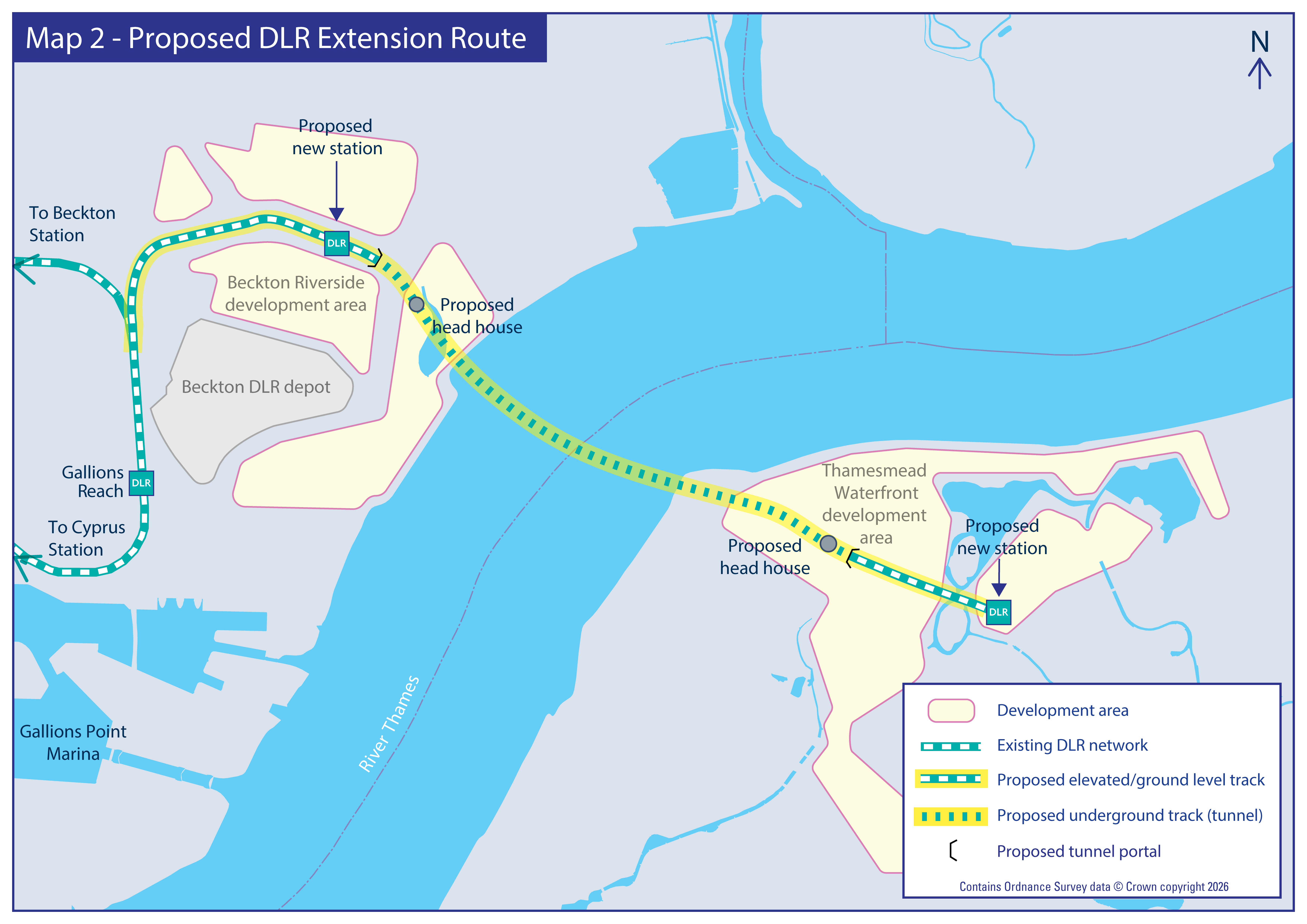
The proposed extension would branch off from the existing DLR line after Gallions Reach, travelling through the Beckton Riverside area on a viaduct before descending to a new ground-level station in Beckton Riverside to the south of Armada Way. From here the track would descend underground into a tunnel to cross under the River Thames to continue the journey towards Thamesmead.
The track would come out of the tunnel at Thamesmead onto a viaduct to pass over the Twin Tumps and Thamesmere before terminating at an elevated station in Thamesmead town centre on the current site of Cannon Retail Park.
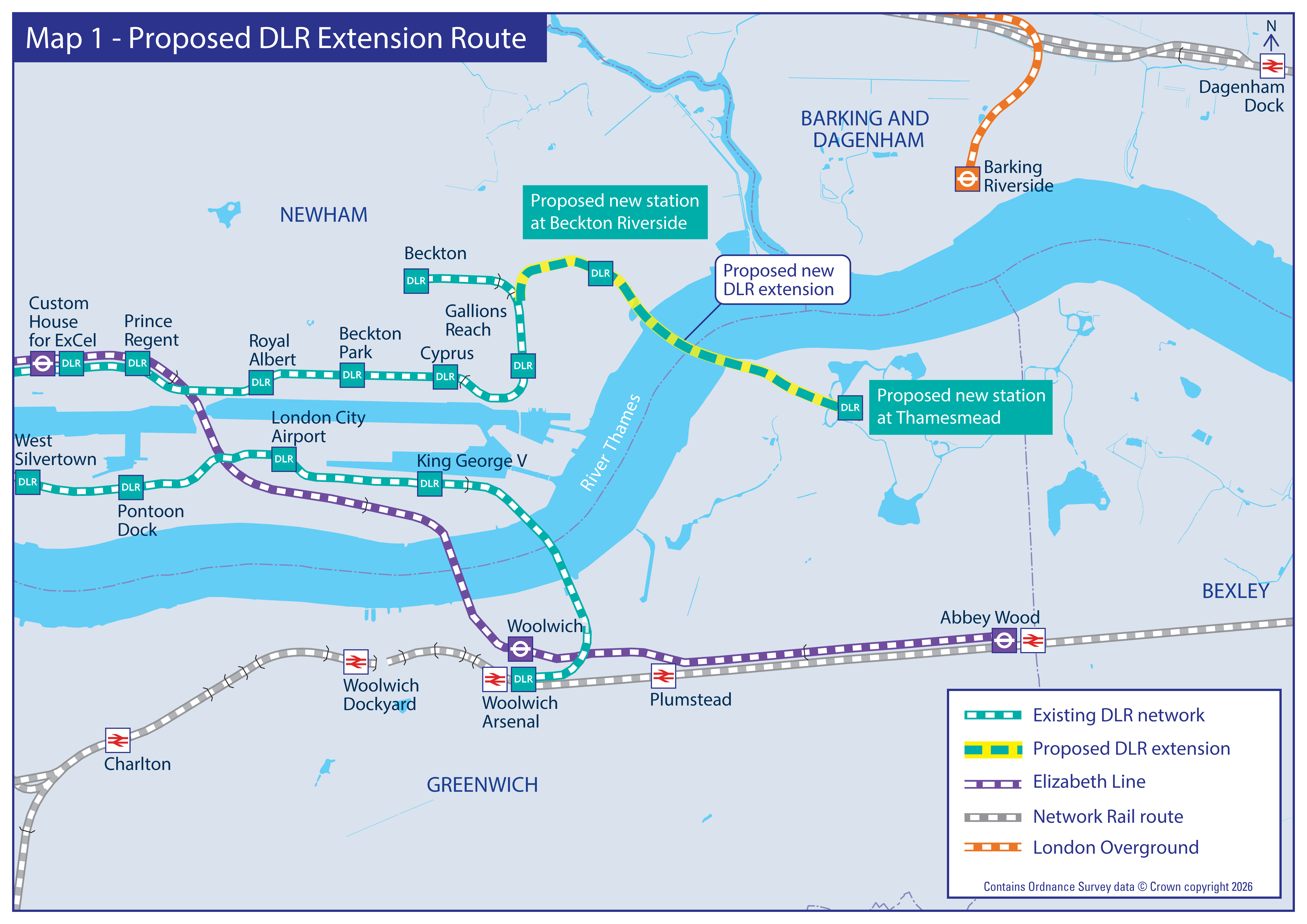 (Click on map for a larger version)
We have continued to work on the designs for the two new stations at Beckton Riverside and Thamesmead. In the previous consultation, we gave you information about where the new stations would be and what they could look like. Since that consultation, we have continued to work on the designs of the new stations, especially how they would integrate and be accessed from the surrounding areas.
View more information about the route and new stations
Why we want to build the DLR extension
Beckton Riverside and Thamesmead both lack direct rail services. This lack of direct public transport has limited local access to jobs, education, and services for decades.
The extension would:
- Give these areas fast and reliable public transport services
- Help support the building of up to 30,000 new homes and the creation of up to 10,000 jobs in Beckton Riverside and Thamesmead Waterfront
- Cut journey times; travelling to the City would drop from about an hour to 35–40 minutes, with trains initially every 8–10 minutes
- Strengthen east London’s cross‑river links, which are currently limited
- Support modal shift from private car to a more sustainable transport mode
Funding the extension
As part of the Autumn Budget in November 2025, the Government announced their commitment to the scheme, including financial support to help us deliver it. This includes a mechanism that enables the Mayor to raise funds through borrowing to pay for the scheme’s construction. This borrowing will be repaid over time using direct funding from Government and new funding unlocked by the scheme, such as the fares revenue from ridership on the extended portion of the DLR route. This funding model builds on the approach successfully delivered on previous projects such as Crossrail and the Northern line extension.
We are working closely with officials from across government departments to finalise formal arrangements for the funding package.
What’s happened so far
Work on a potential DLR extension began in 2019, with public consultation starting in 2024. Support has remained consistently strong and has played a major role in shaping the work we are consulting on now.
Before our first consultation in February 2024, we assessed whether a DLR extension was the right solution for improving links to two major growth areas. Feedback showed clear backing for the concept, especially the need for better cross‑river connections and support for new homes. This confirmed the preferred route and firmly established Beckton Riverside and Thamesmead as the key areas to serve. In addition to the consultation, we ran sample polling in locations in Beckton, Gallions Reach, Thamesmead and Abbey Wood. Of the 356 people we polled, 85% supported or strongly supported our proposals.
View the 2024 consultation report
As the design developed, we carried out a second consultation in June 2025 where we asked for views on station options, tunnel plans and construction impacts. More than 1,400 people responded, with strong support for the core elements:
- 76% backed the route from Gallions Reach
- 66% supported our proposed location for a station at Beckton Riverside
- 77% supported our proposed location for a station in Thamesmead town centre
We also gave more information about the case for the scheme and our options selection process for deciding where the new stations should be located.
This feedback directly shaped the proposals now being taken forward.
View the 2025 consultation report
What happens next
We will continue to develop our proposals and complete the Environmental Impact Assessment work. This will help us to confirm the design of the final scheme that we will apply for permission to build and operate through a Transport and Works Act Order (TWAO) application.
We are planning to submit this application in early 2027.
View more detailed information about the TWAO process
Subject to a funding agreement with Government and the necessary permissions granted, construction could begin by 2029 with the extension and new stations at Beckton Riverside and Thamesmead potentially opening in the early 2030s.
Other transport projects in the area
Transport improvements in Thamesmead
Alongside the proposed DLR extension, we are continuing to develop plans for other changes in Thamesmead following recent public consultations. These are changes to roads between Woolwich and Abbey Wood via Thamesmead, aimed at making bus journeys faster and to improve the area for people walking and cycling. Also, the creation of a new road for buses, cyclists and pedestrians, which would join up the two ends of Barnham Drive.
View the Thamesmead bus lane, walking and cycling consultation report
View the Barnham Drive consultation report
Thames Gateway Bridge
In the previous consultation, we told you about the interface between land needed to deliver new homes and town centres in Beckton Riverside and Thamesmead and land safeguarded for the previously proposed Thames Gateway Bridge project. The safeguarding direction for the bridge was removed in July 2025 and there are no plans to build this road bridge.
How we could build it
In this section we provide information about how we could build the the DLR extension, including details about:
- Construction worksites in Beckton Riverside, under the River Thames and in Thamesmead town centre
- Managing construction across all areas
- Code of Construction access
Building the DLR extension would involve up to five years of construction activity in Beckton Riverside, Thamesmead, and beneath the River Thames. We want to deliver this new transport link as safely and efficiently as possible, while keeping disruption to local communities, businesses, and road users as low as possible.
To build the extension, work would take place in three areas:
- Beckton Riverside – we would construct a new junction with the existing DLR, build new viaducts, create the Beckton Riverside station, and launch the tunnel boring machine
- Under the River Thames – we would excavate two 1.5 kilometre tunnels, one in each direction, to provide the river-crossing for the new railway
- Thamesmead town centre – we would build a shaft where the tunnel boring machine will arrive, create new viaduct structures, and deliver the new Thamesmead station
The works would be delivered in the following phases:
- Preparing sites – clearing land, setting up compounds, and diverting utilities
- Building foundations and structures – creating piles, viaduct supports, station bases, and tunnel shafts
- Tunnelling and major construction – excavating the tunnel beneath the River Thames and building both new stations
- Railway systems installation – laying track, installing power, signalling and telecoms, and integrating the line with the existing DLR north of Gallions Reach station
- Finishing works – landscaping, public realm improvements, and integrating the extension into the surrounding area
Construction worksites
We would need several worksites on both sides of the river to build the new stations, the tunnel underneath the River Thames and all other associated works and infrastructure. These worksites need to be big enough so that we can safely carry out all construction activities, provide welfare facilities for workers and store materials.
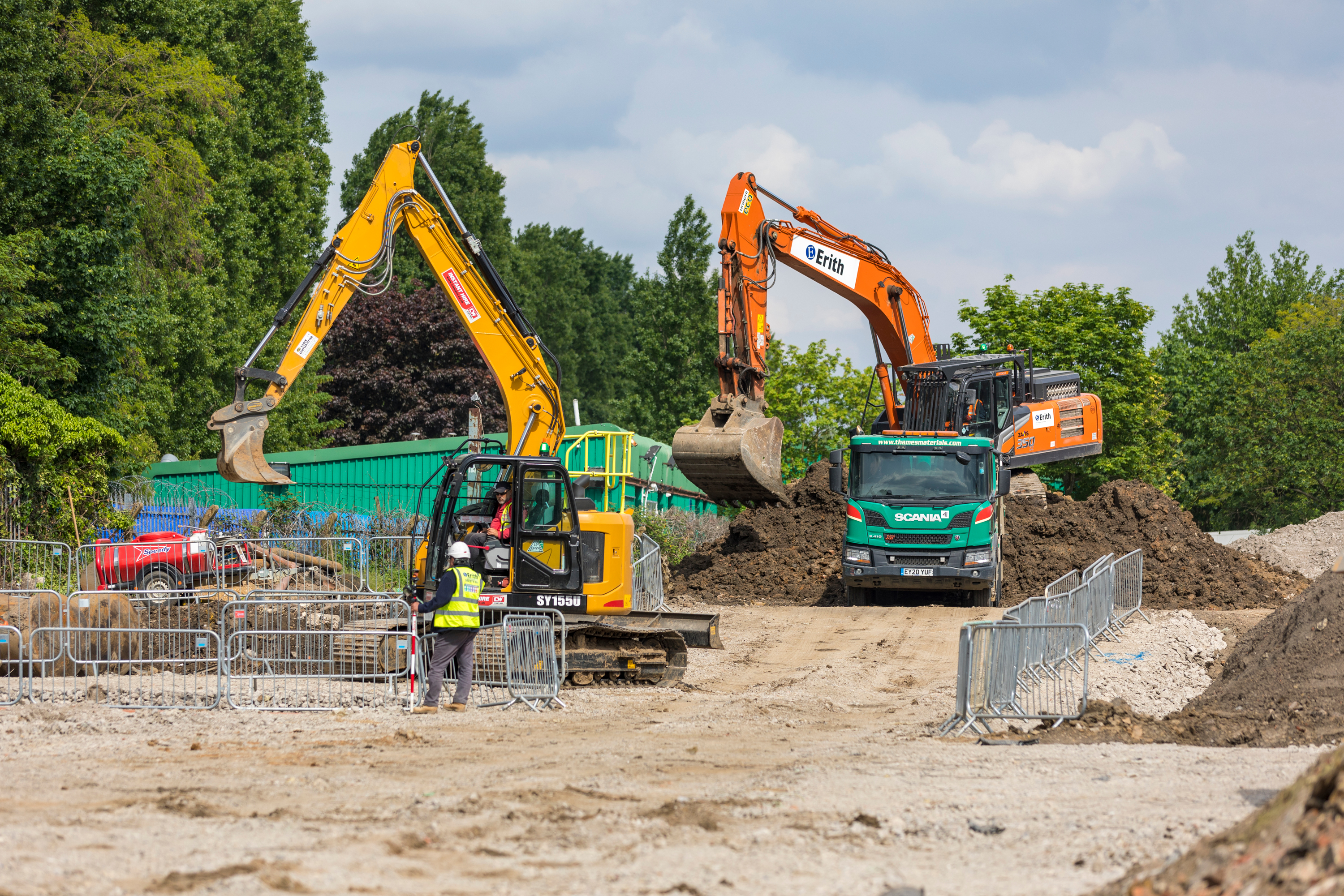 Example construction worksite
 Construction worksites in Beckton Riverside
We would need four worksites at Beckton Riverside to build the new station, connect the extension to the existing DLR and launch the tunnel boring machine.
Temporary access routes, short‑term road changes and construction traffic would be needed. We would work closely with the London Borough of Newham, local residents and businesses to reduce disruption as much as possible.
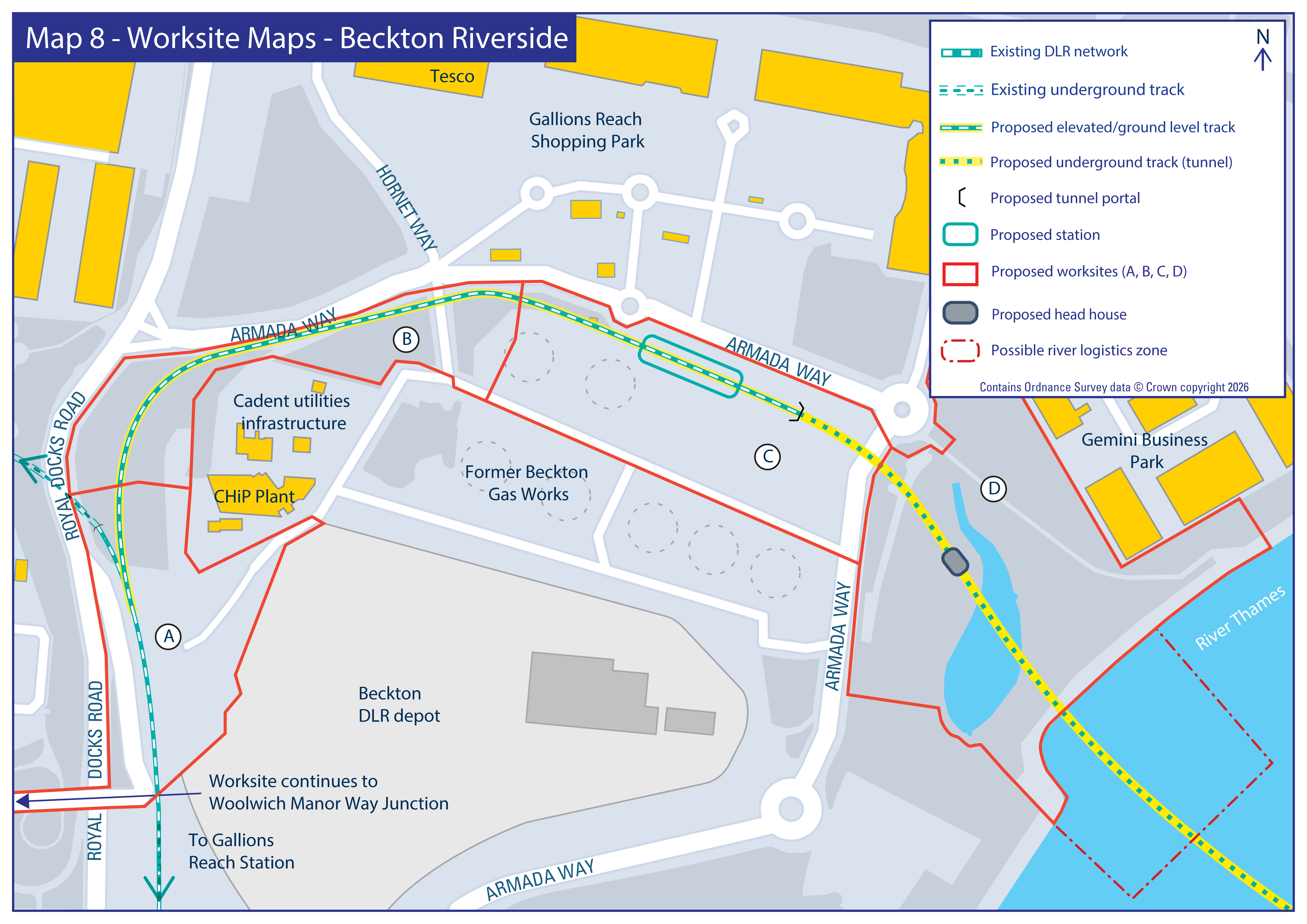 (Click on map for a larger version)
Additionally at Beckton Riverside, we would build a launch shaft, where the tunnel boring machine (TBM) would be assembled and begin tunnelling beneath the River Thames. This shaft would be made permanent and become an emergency access and evacuation shaft when the railway becomes operational.
A head house would sit above the shaft. This is usually a two‑storey building that contains ventilation fans, electrical equipment and maintenance access. Its design would take account of the surrounding area.
Please see below Beckton head house illustration for indicative purposes.

Building the tunnel beneath the river
Two tunnels, each around 1.5 kilometres long, would be bored beneath the River Thames – one for trains in each direction.
The extension would use three types of tunnel construction:
- Bored tunnels beneath the river
- Cut‑and‑cover tunnels on both sides of the river, where the railway is closer to the surface
- Cross passages between the tunnels, used for emergency evacuation if needed
These tunnels could not operate safely without permanent access, ventilation and emergency routes provided by shafts on both sides of the river.
View more information about tunnelling and its possible impacts
Construction worksites in Thamesmead
In Thamesmead, two worksites would be needed to build the new station, new viaducts and the tunnel reception shaft.
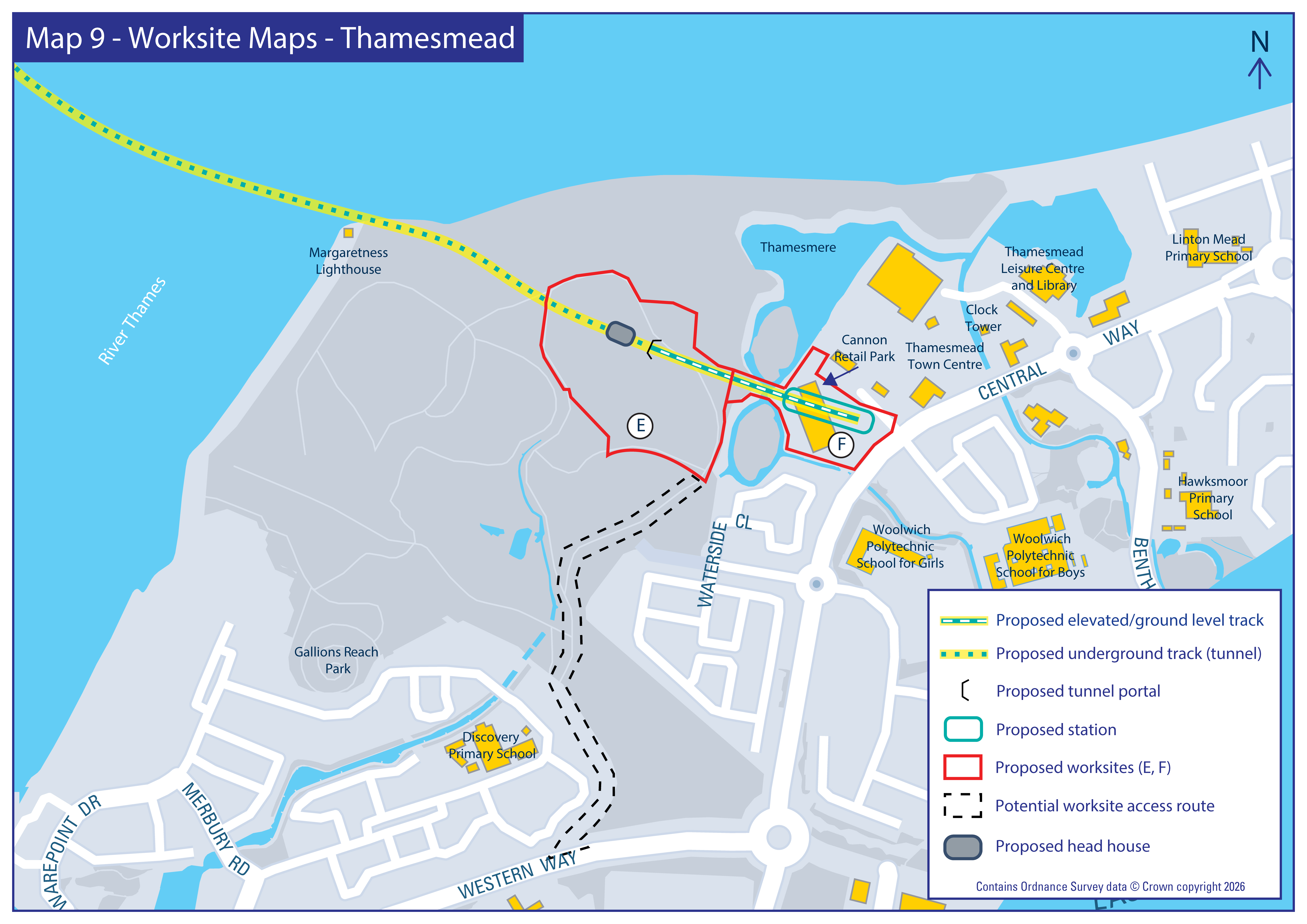 (Click on map for a larger version)
As at Beckton Riverside, we would carefully plan access routes, traffic management and working arrangements to reduce disruption for residents, businesses and road users.
Thamesmead would host the reception shaft, where the tunnel boring machine would arrive after tunnelling beneath the river. The machine would then be turned around and relaunched to build the second tunnel. This shaft would be made permanent and become an emergency access and evacuation shaft when the railway becomes operational.
A head house would also be built here. This is typically a two storey structure and would be designed to fit in with the local town centre environment.
View more detailed information on proposed worksites at Beckton Riverside and Thamesmead
Managing construction across all areas
Building the extension would involve moving large amounts of material, such as excavated soil, concrete, steel and tunnel segments.
We are exploring different ways to move materials, including:
- Road
- River
- Rail
- A combination of these
For environmental assessment, we assume all materials are moved by road. However, we are actively looking at opportunities to reduce road movements where possible.
Across all locations, we would:
- Follow the waste hierarchy, prioritising reduction and reuse
- Align with TfL, London Plan and Mayoral policies on sustainable construction logistics
- Minimise heavy goods vehicles (HGV) movements as far as reasonably possible
- Learn from similar projects such as Silvertown Tunnel, Barking Riverside extension and Thames Tideway Tunnel
- Work closely with the Port of London Authority, Environment Agency and local councils
Code of Construction Practice
A draft Code of Construction Practice would be submitted with the Transport and Works Act Order (TWAO) application. This would set clear rules for construction across all three areas, including:
- Working hours
- Noise and vibration controls
- Traffic routes
- Site security and lighting
- Waste management and environmental protection
- Maintaining access to homes and businesses
Impacts on the existing DLR
In this section we provide information about:
- Service changes during construction
- How DLR services would run once the extension opens
- Turnbacks and future service changes
- Other expected impacts on the DLR
- Gallions Reach station
- Additional trains and capacity on the DLR
Service changes during construction
Most of the work needed for the proposed DLR extension would take place away from the current Beckton branch.
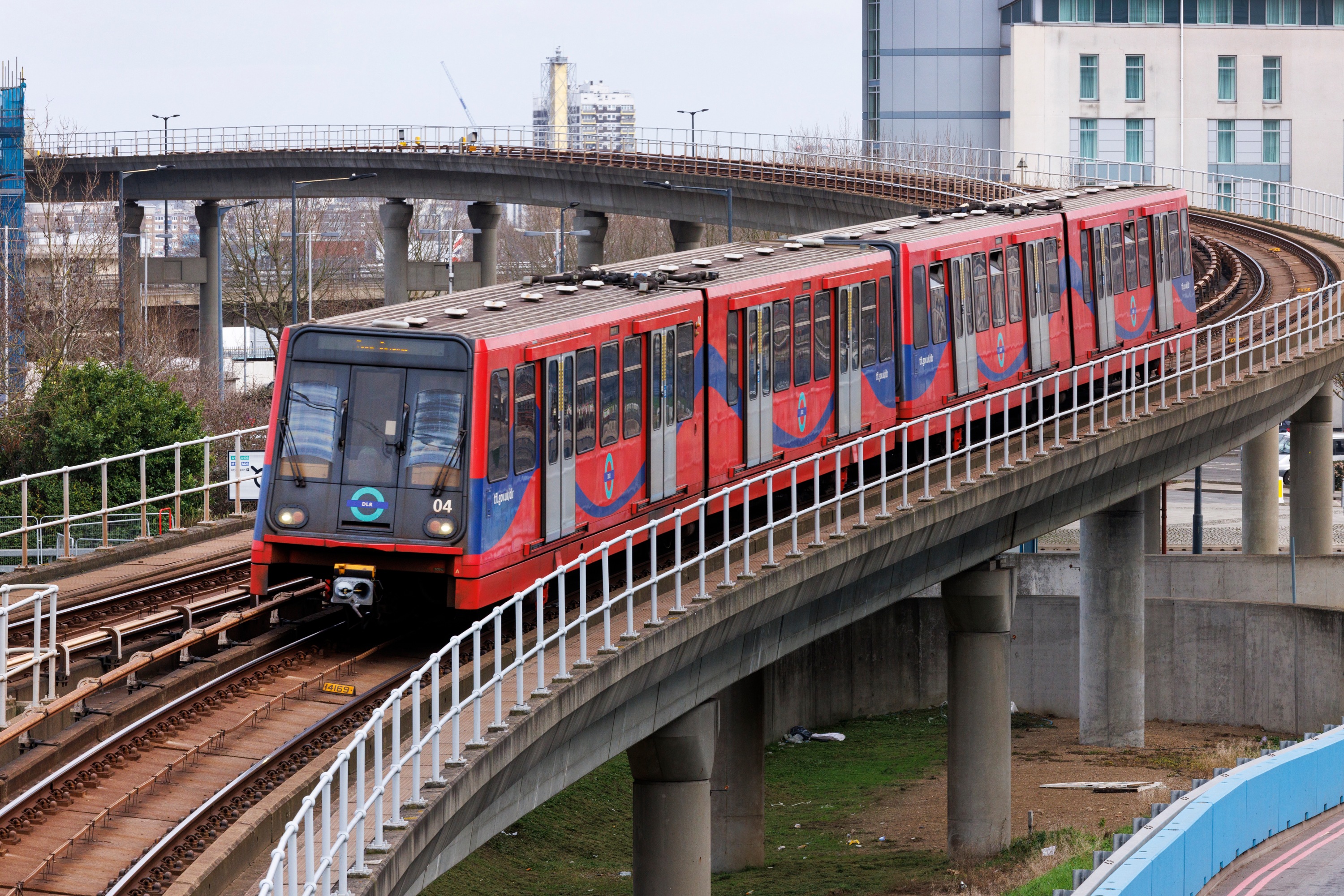 DLR trainConstruction sites would be set back from the operational railway so normal DLR services are not expected to be affected for most of the construction period.
At a later stage of construction, we would need to connect the newly built railway to the existing network. This work can only be done safely when trains are not running. As a result, there would be limited closures over a series of weekends or during a longer planned period. These closures would also allow us to test and commission the new track, systems and signalling before services begin.
During any closures we would provide alternative travel options.
How DLR services would run once the extension opens
At the moment, DLR services run between Tower Gateway and Beckton throughout the day. Additional trains also run between Stratford International and Beckton during off peak hours, and between Canning Town and Beckton during peak times.
When the extension opens, we initially expect to run:
- A train every 8–10 minutes to and from Thamesmead (via Beckton Riverside)
- A train every 8–10 minutes to and from Beckton
Together, this would mean a train every 4–5 minutes between Canning Town and Gallions Reach. To deliver this level of service, we will need more trains. The destination of trains from Thamesmead and Beckton Riverside beyond Canning Town will be confirmed later closer to scheme opening and will be informed by wider network and customer needs.
Turnbacks and future service changes
In our June 2025 consultation, we explained that a turnback for trains might be needed as part of the extension. We identified Canning Town or Royal Victoria as potential sites for this. Although our work has shown that Canning Town would be the preferred location for this, we have concluded that the turnback would only be required should service levels exceed those set out above. This is something we might look to do in future after the extension opens and as new homes and jobs are built over time, increasing demand for the DLR. As such, any turnback would be delivered as a separate project in future and would be subject to separate engagement and approvals.
Other expected impacts on the DLR
As new homes and jobs are delivered at Beckton Riverside and Thamesmead, we expect more people to use the DLR, particularly between Canning Town and Beckton. This growth would happen over time as communities develop and people start to use the line for work, education and leisure.
The Environmental Statement and Transport Assessment, which will be submitted as part of our Transport and Works Act Order (TWAO) application, will set out in detail how the extension and related development may affect passenger numbers and the operation of the wider public transport network. They will also identify any improvements that may be needed across the network to accommodate these changes.
Gallions Reach station
In our June 2025 consultation, we identified that Gallions Reach station might need additional capacity in the future.
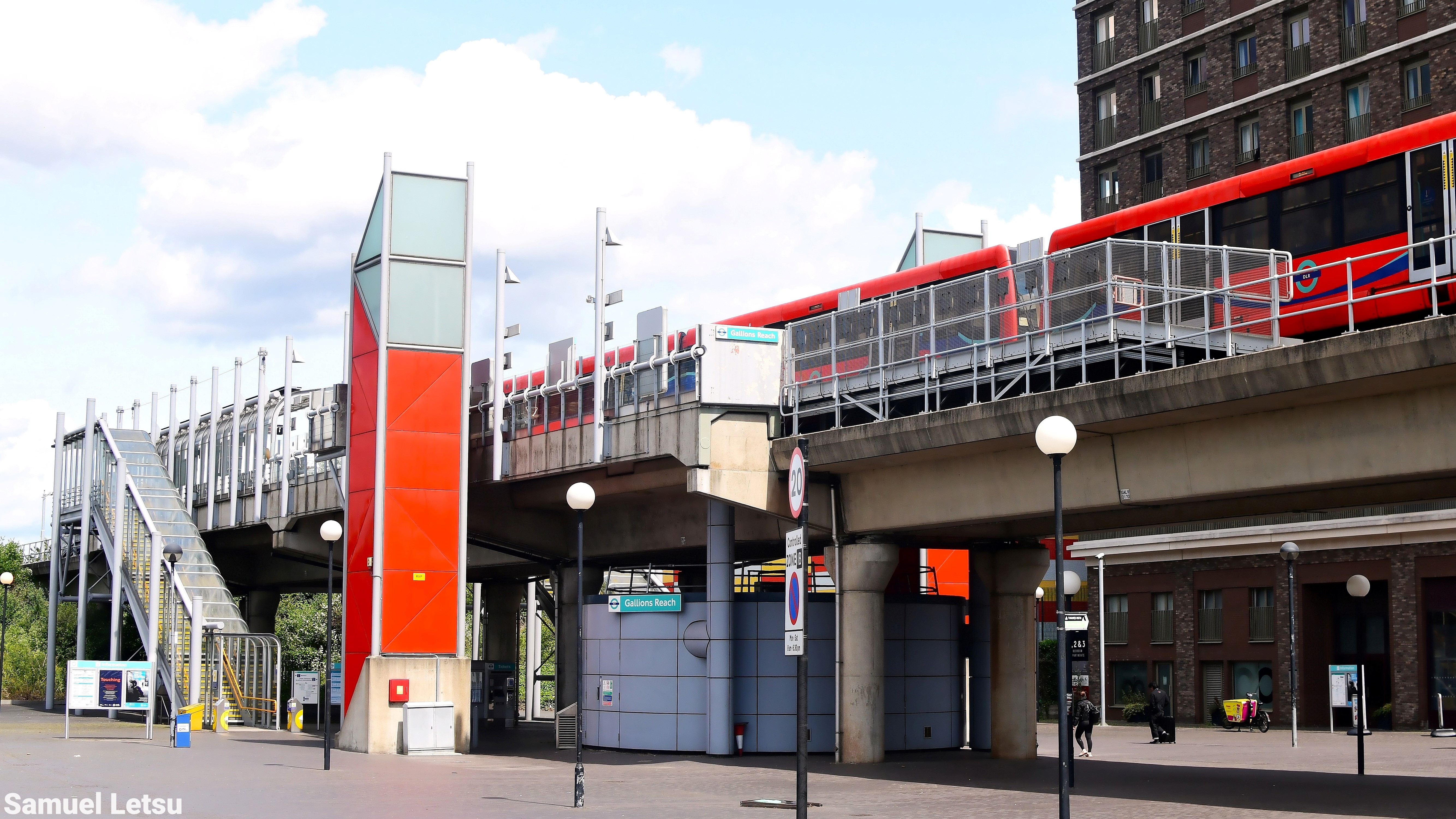 Gallions Reach station
Following further assessment, we have concluded that additional station capacity is not required as part of the extension scheme. This is because, with the extension in place alongside already planned works and a service level of a train every four minutes, future line and station flows can be accommodated safely by the current station.
However, we recognise that Gallions Reach is already growing in popularity locally alongside the planned future growth in homes and jobs at Beckton Riverside and Thamesmead. We will continue to keep the station under review and will explore opportunities for improvements as demand increases.
Additional trains and capacity on the DLR
We are already introducing a new fleet of DLR trains to replace the oldest trains currently in use. These new trains feature:
- Spacious walk-through carriages
- Live travel information
- Air conditioning
- Improved accessibility features
- Mobile device charging points
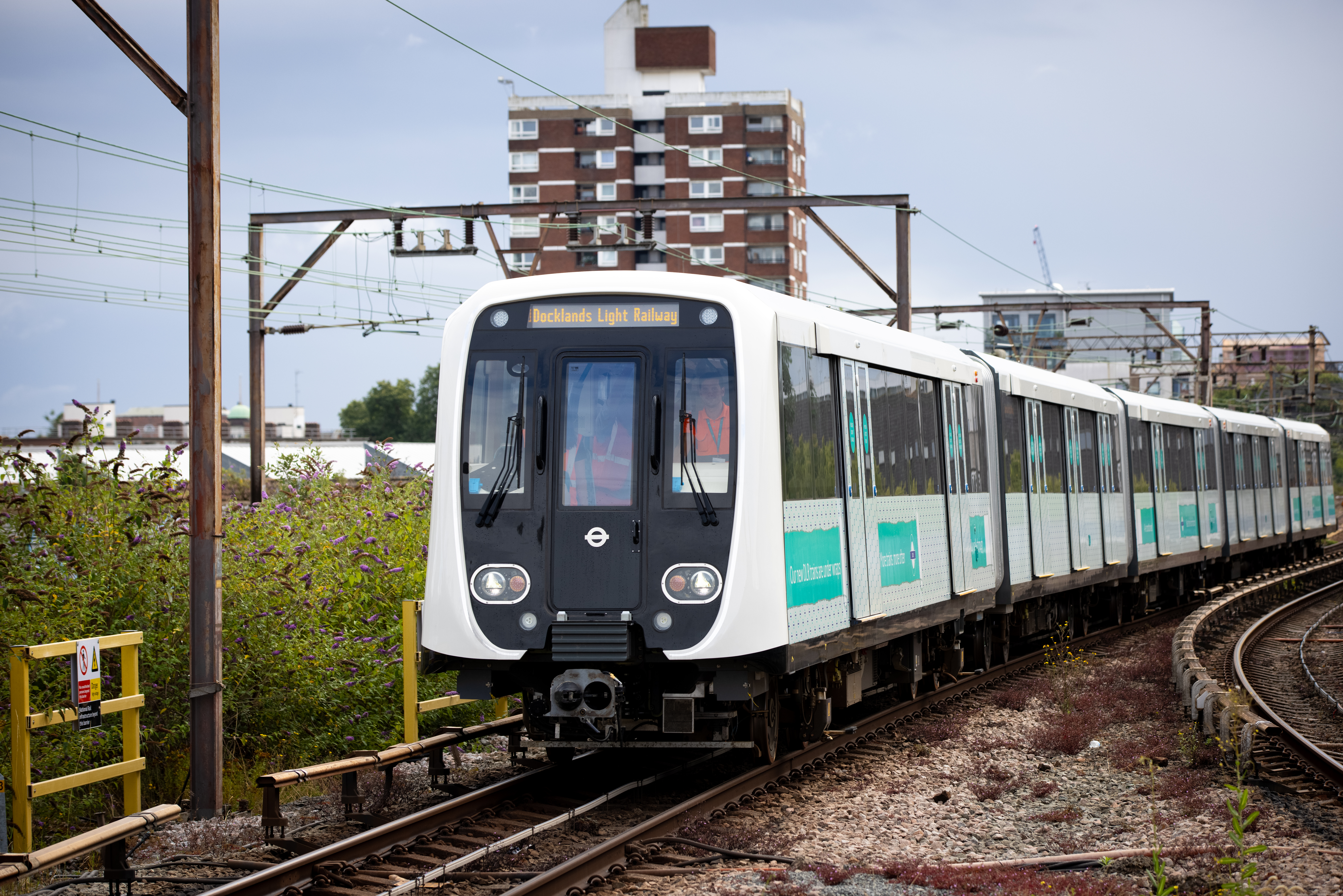 New DLR trainTo support these new trains, major improvements are also being made at Beckton depot and to power and communications systems across the DLR. This work is separate from our work on the new extension.
If the extension goes ahead, we would order a small number of additional trains to operate the new services to Thamesmead. These extra trains would be needed to deliver the planned service levels on both branches.
This would allow us to run frequent services to Thamesmead and to Beckton and between Canning Town and Gallions Reach.
Return to the top of the page
Impacts on the environment
In this section we provide information about:
- Our approach to sustainability
- Beckton Riverside
- The River Thames
- Thamesmead
As we develop our plans for the DLR extension to Beckton Riverside and Thamesmead, we are looking closely at how the scheme could affect the environment, and how we would mitigate impacts and explore opportunities for enhancements. We are currently progressing work on a full Environmental Impact Assessment (EIA) as part of the Transport and Works Act Order (TWAO) process. This process ensures that the environmental effects of the proposals are properly considered in the decision-making and engineering design processes. The results of the EIA are included in an Environmental Statement and submitted with the application.
While this work is still underway, we have set out below what we think may be potential impacts of the scheme. The impacts described are not exhaustive or definitive at this stage but reflect our current understanding. They may change as further design, surveys and environmental assessments are completed.
View an introduction to the Environmental Statement and our approach to biodiversity and carbon
Our approach to sustainability
While specific commitments will be confirmed as the design progresses, the project is being guided by our core sustainability themes, which consider environmental, social and economic outcomes together.
We are seeking to understand how the proposed DLR extension could:
- Respond to climate change, including reducing carbon emissions where practicable
- Improve the resilience of infrastructure and services to extreme weather
- Protect and, where possible, enhance the built and natural environment
- Reduce impacts on air quality, noise levels and local amenity, particularly near existing communities and sensitive locations
We are drawing on a wide range of existing studies and data, and undertaking new surveys of existing wildlife, animals, habitats, archaeological surveys, open space usage surveys, noise and air quality information. Data on traffic levels, assessments of existing views, land quality, heritage features and pollution levels have also been reviewed.
Beckton Riverside
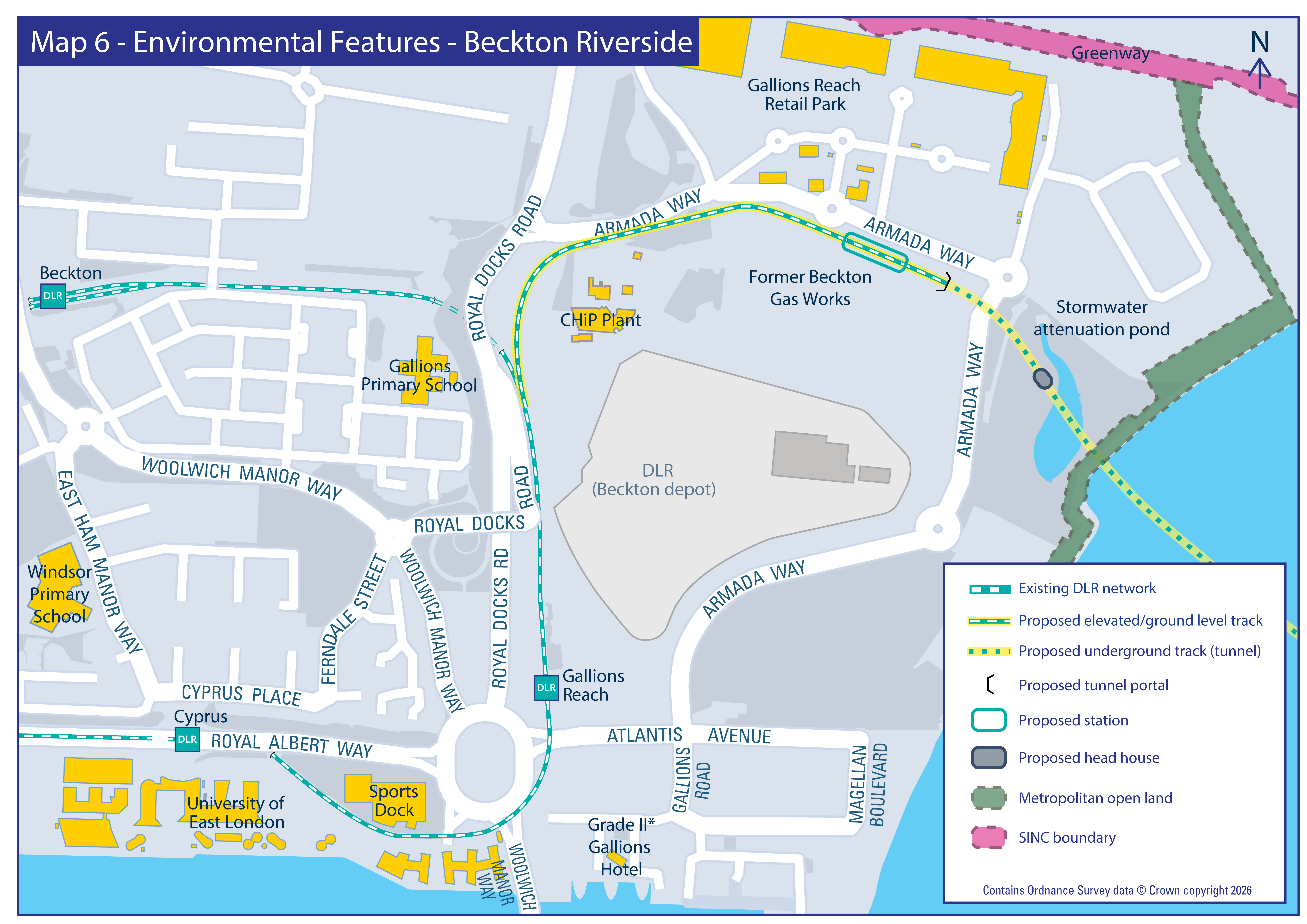
Beckton Riverside and the surrounding area has a long industrial past and continues to change. Today, the area includes new homes, transport links and growing green spaces alongside historic land uses.
As part of developing our plans for the DLR extension, we are carefully assessing how construction and operation could affect the local environment. This includes looking at possible temporary impacts during construction, such as:
- Noise and vibration
- Changes to traffic and vehicle movements
- Visual changes in the area
- Effects on land and the riverside, particularly where there has been historic industrial activity
We are also looking at whether construction works could affect any archaeological remains or land that may be contaminated due to previous uses.
Once the extension is running, environmental impacts are expected to be limited. The new line is also expected to improve connections and help support ongoing regeneration in this opportunity area.
View more details about our environmental assessments in Beckton Riverside
River Thames
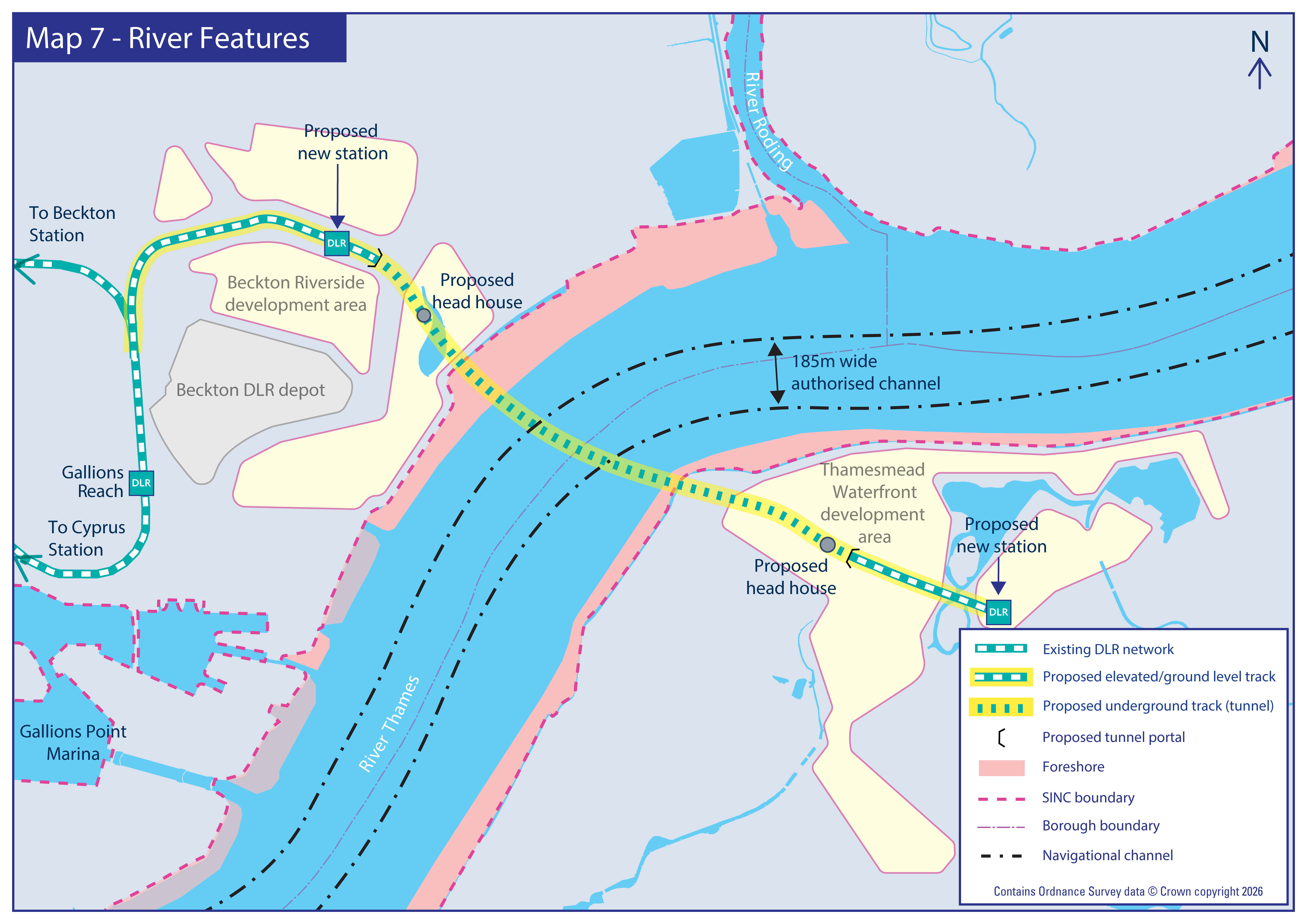 (Click on map for a larger version)
The River Thames is a unique and important part of the local area. It is a tidal river with valuable habitats, a historic riverside, and wildlife including protected fish species and marine mammals.
As we develop the scheme, we are carefully assessing how construction activities could affect the river environment. This includes looking at temporary impacts, such as:
- Effects on riverbed habitats and water quality
- Changes to river use, including navigation and recreation
- Noise, lighting and vessel movements that could affect people and wildlife
- Changes to the look and character of the riverside during construction
Any river-based structures are expected to be temporary and removed once construction is complete. No long-term impacts on the River Thames are expected once the extension is operating.
View more details about our environmental assessments on the River Thames
Thamesmead
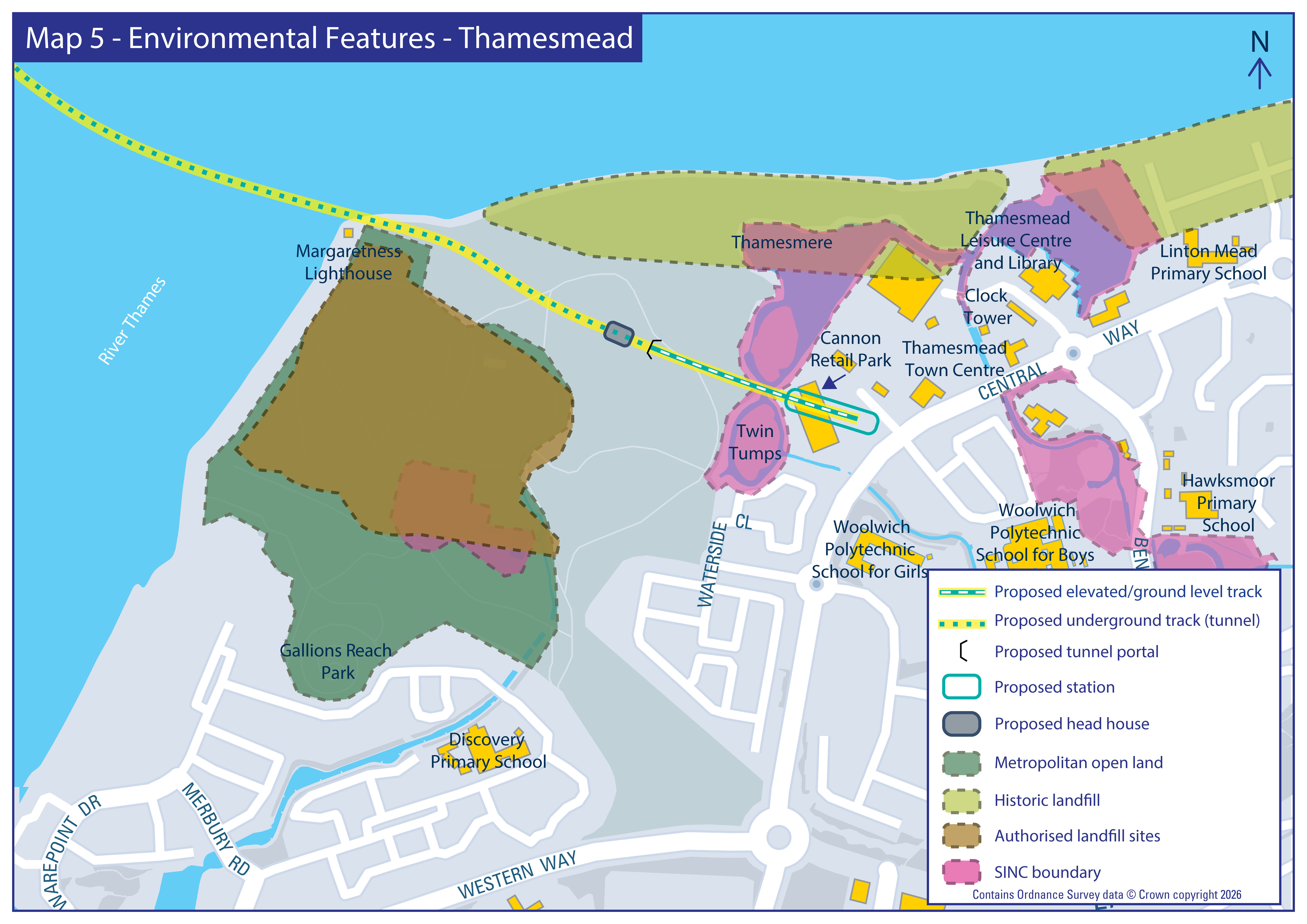
Thamesmead is known for its distinctive layout of neighbourhoods, open spaces, lakes and waterways. These features play an important role in the area’s character and provide valuable spaces for people and wildlife.
As part of developing our plans for the DLR extension, we are carefully assessing how construction and operation could affect the local environment. This includes looking at possible temporary impacts during construction, such as:
- Increased traffic and vehicle movements on local roads
- Noise and dust from construction activity
- Temporary effects on green spaces and ecological areas, such as the Twin Tumps and Thamesmere Site of Importance for Nature Conservation
- Interaction with archaeological features near the future station site
Once the extension is operational, environmental impacts are expected to be limited. The new line is also expected to improve local connections and support regeneration in Thamesmead.
View more details about our environmental assessments in Thamesmead
Transport and Works Act Order
What is a Transport and Works Act Order?
Following this consultation, we will start to finalise our proposals ready to submit a Transport and Works Act Order (TWAO) application to the Sectary of State for Transport to make a decision on the scheme.
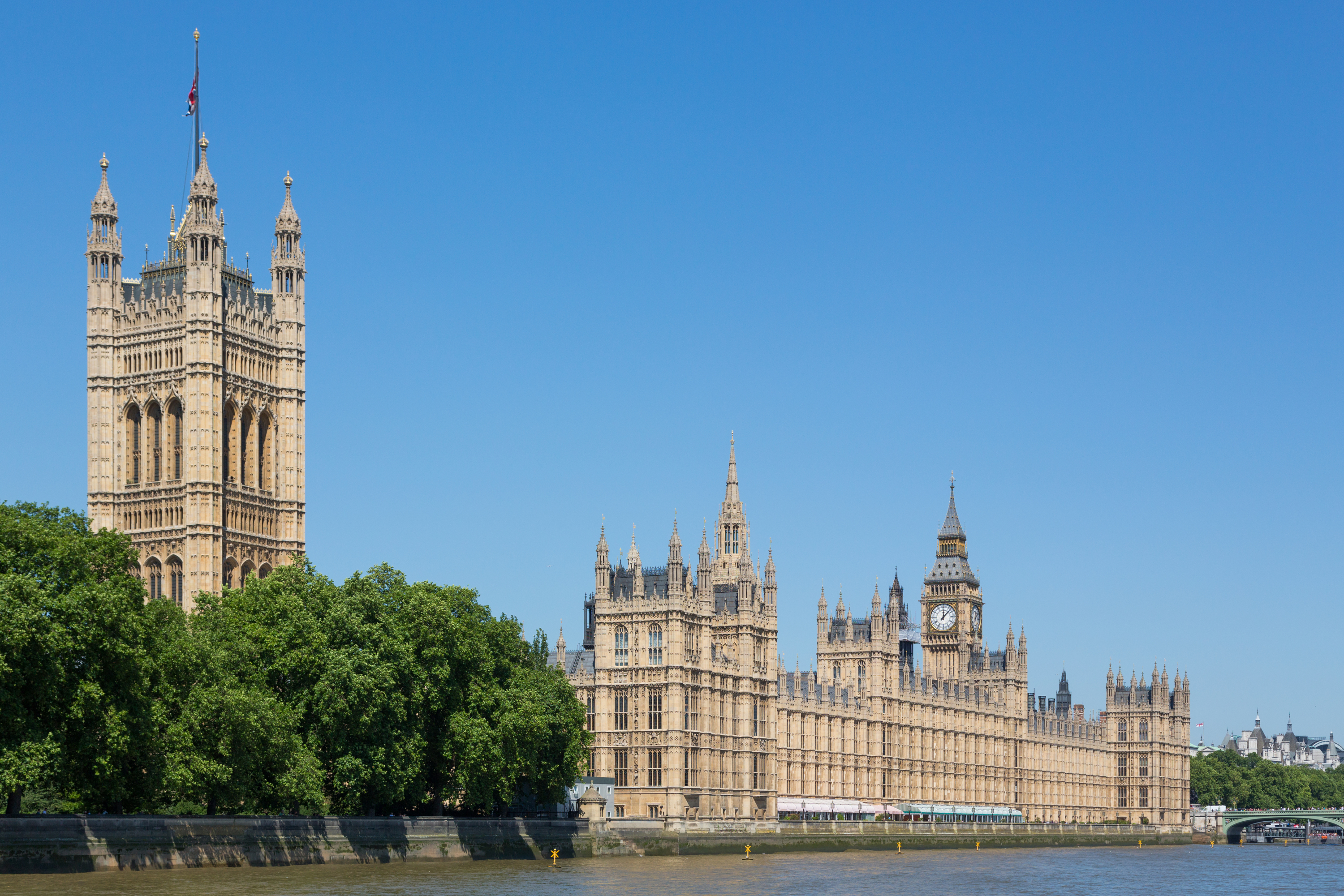 Houses of ParliamentA TWAO is a statutory instrument made by the Secretary of State under the Transport and Works Act 1992. A TWAO can authorise the construction, operation and maintenance of new transport infrastructure, such as the proposed extension of the DLR to Thamesmead.
A TWAO may also provide compulsory powers for acquiring property interests and rights. A TWAO application could also be accompanied by a request to the Secretary of State for Transport to give a direction for deemed planning permission for the works to be authorised by a TWAO, meaning that planning permission could be granted by the government rather than the local planning authority.
Land Acquisition and Compensation
The land and property needed for the extension would be acquired either voluntarily or by compulsory purchase powers granted through a TWAO. Where possible we would seek to reach an agreement with landowners to acquire land needed for the scheme in advance of the TWAO application. Owners and occupiers of land that may be compulsorily acquired for the purposes of our proposals may be entitled to claim compensation.
The TWAO Application Process
The TWAO application would include:
- A draft of the proposed TWAO for the extension which would grant the required powers to construct and operate the extension
- A request to the Secretary of State for Transport for a direction for deemed planning permission
- An Environmental Statement which provides a description of the proposed scheme and how we propose to carry out the works and manage the construction process. It also sets out how the proposed scheme may affect the environment and how we propose to reduce those potential effects to an acceptable level
- A non-technical summary of the environmental statement
- A Funding Statement
- A Consultation Report
- A Design and Access Statement
- A Statement of Aims
- Supporting plans and documents
How the decision-making process works
Following our submission of the TWAO application, a formal process will be followed where you can have your say.
1. Public representation period
Once TfL submits the TWAO application, there will be a 42‑day period when anyone can send in comments, support, or objections to the Secretary of State.
2. Potential Public Inquiry
It is possible that an independent Public Inquiry will be held. This is a formal process where an Inspector listens to evidence from TfL, stakeholders, and members of the public.
The inquiry usually involves:
- Statements of Case – written summaries of what each participant plans to say
- A pre-inquiry meeting, run by the inspector, to explain how everything will work
- Proofs of Evidence – detailed documents submitted four weeks before the Public Inquiry
- Questioning of expert witnesses during the inquiry
3. The Inspector’s report
The Inspector writes a report with recommendations and sends it to the Secretary of State for Transport.
4. Final decision
The Secretary of State will decide whether to:
- Approve the TWAO – in this case we would be officially given permission to build the project. This includes using or buying land needed and carrying all out all works described in the application
- Reject the TWAO – we would not be allowed to build the project as we have proposed it. Powers to buy land would not be granted and we would likely have to submit a revised application
- Approve the TWAO with changes – sometimes the Secretary of State agrees that a project should go ahead but with certain changes to the TWAO. In this case we would need to carry out these adjustments, which would be clearly set out in the written decision
The decision will be published in writing, and anyone who took part in the inquiry will receive a copy.
Accessible information
We want to make sure everyone can take part in our consultations. To help make it accessible to everyone we have provided our consultation information in the following formats:
 British Sign Language
 Easy Read
 Audio files
Translation
You can also translate the information on this page into another language by using the ‘Select language’ button at the bottom of the page
More information and questions
We will be holding drop-in events on the following dates and locations where you can hear more about our proposals:
- Monday 15 June 2026St Mark’s Centre, 218 Tollgate Road, Beckton, E6 5YA (15:00-19:00)
- Friday 19 June 2026The Moorings Sociable Club, Arnott Close, Thamesmead, SE28 8BG (13:00-17:00)
- Saturday 27 June 2026Thamesmere Leisure Centre, Thamesmere Drive, SE28 8RE (12:00-16:00)
- Saturday 4 July 2026Gallions Reach Shopping Park, Armada Way, E6 7ER (14:00-18:00)
These events will be staffed by TfL staff who have been involved in the development of our proposals for Extending the DLR to Beckton Riverside and Thamesmead, and are intended for people who need to discuss something with us to help them to respond.
If you are unable to attend these events but would like to discuss the proposals further with us, please get in touch and we can respond to your queries directly. You can do so by:
- Sending us an email to DLRTEx@tfl.gov.uk (please mark your email ‘Extending the DLR to Beckton Riverside and Thamesmead’)
- Call us on 020 3054 6037 and leave your name and contact number and we will call you back. Please quote ‘Extending the DLR to Beckton Riverside and Thamesmead’ when leaving your message
- Write to FREEPOST TfL HAVE YOUR SAY (no postage stamp required)
- Use our 'Questions' tool to submit a question to us directly
We have also provided more information to help you respond and a set of Frequently Asked Questions:
Tell us your views
You can reply by completing our survey, which should take no more than 10 minutes to complete or if you are short on time, you can submit a quick response.
 |  |
The closing date for comments is Thursday 16 July 2026.
Latest news
Update 8 October 2026
Today we have published our consultation report which sets out the feedback we received and our response to issues raised.
There were 553 responses to the consultation, including 26 responses from stakeholder organisations; including local authorities, landowners and developers, environmental bodies, political groups, business groups, transport groups and utility providers.
We have carefully considered all the feedback received in response to the consultation and will use this feedback to continue to finalise our proposals. We do not feel that any issues were raised that mean we need to significantly change the scheme.
We will continue working with our partners in government, the Royal Borough of Greenwich and the London Borough of Newham, the Greater London Authority, the Environment Agency, utilities, landowners and developers, as we proceed to submit a Transport and Works Act Order application to the Secretary of State for Transport for consent to build and operate the scheme in 2027.
Update 17 July 2026
This consultation has now closed. Thank you to everyone who responded. We are analysing your feedback and will report back shortly.
The feedback to this consultation will help us as we finalise our proposals. We are planning to submit an application under the Transport and Works Act to build and operate the proposed extension in early 2027.
View more information about the planning process and the Transport and Works Act
Should our application be successful and we are granted permission to build and operate the extension, subject to a funding with Government, construction could begin by 2029 with the extension and new stations at Beckton Riverside and Thamesmead potentially opening in the early 2030s.