

River Thames
This page summarises the potential environmental impacts on the River Thames if the river is utilised for construction purposes. All impacts outlined below would go through further evaluation through the Environmental Impact Assessment (EIA) process, during which appropriate mitigation measures would be developed. As such, these impacts should not be considered definitive at this stage.
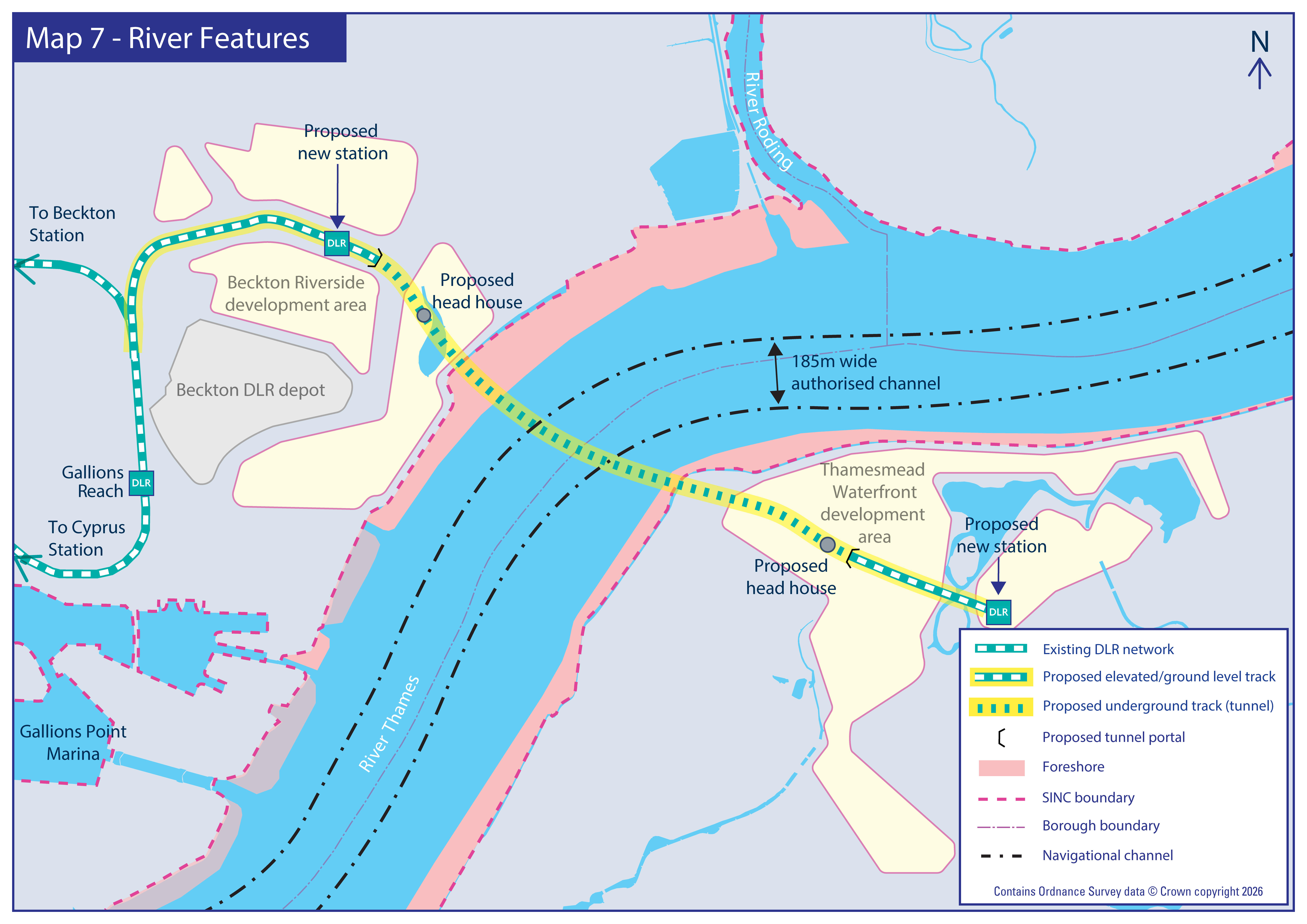
Existing environmental conditions
The River Thames is a large tidal river, with water levels rising and falling several metres during each tide cycle. It has been heavily modified over the years with flood defences, wharves and quays lining much of its tidal length.
At low tide, areas of foreshore are exposed along both side of the river at this location. These are important for wildlife and have the potential to contain archaeological remains.
The river supports fish, marine mammals and bird life and forms part of the functional floodplain, meaning it regularly floods and helps store flood water safely.
The River Thames is also a busy working river, used for commercial shipping, leisure boating, tourism, and walking and cycling along the Thames Path.
Construction effects
Construction impacts will depend on how the river is used. Existing wharves may be used, or temporary structures such as piers or jetties may be installed in the river. These temporary structures would be removed after construction.
Possible short‑term effects include:
- Changes to views, noise and activity along the river
- Temporary disturbance to wildlife and habitats
- Small, localised risks to water quality
- Disturbance of riverbed sediments or historic material
Care will be taken to ensure tidal flows and flood risk are not affected.
After construction
All temporary river structures would be removed and the river is expected to return to its current condition. The removal of any temporary structures would be carefully managed and any permanent mitigation would be agreed and implemented to ensure there are no long-term effects.
Mitigation
All works in the river would follow a Code of Construction Practice, including controls on:
- Noise, vibration and lighting
- Protection of wildlife
- Archaeological monitoring
- Pollution prevention and spill response
- Navigational safety, agreed with the Port of London Authority
If the river is used for construction purposes, the EIA will confirm whether any significant effects are likely and whether further mitigation is required.
Consultation has concluded


