

Thamesmead
This page summarises the potential environmental impacts in Thamesmead. All impacts outlined below will undergo further evaluation through the Environmental Impact Assessment (EIA) process, during which appropriate mitigation measures will be developed. As such, these impacts should not be considered definitive at this stage.
Existing environmental conditions
Thamesmead was built on former marshland and designed as a “New Town.” This history explains its distinctive layout: large housing estates, wide open spaces, and a connected system of lakes and waterways.
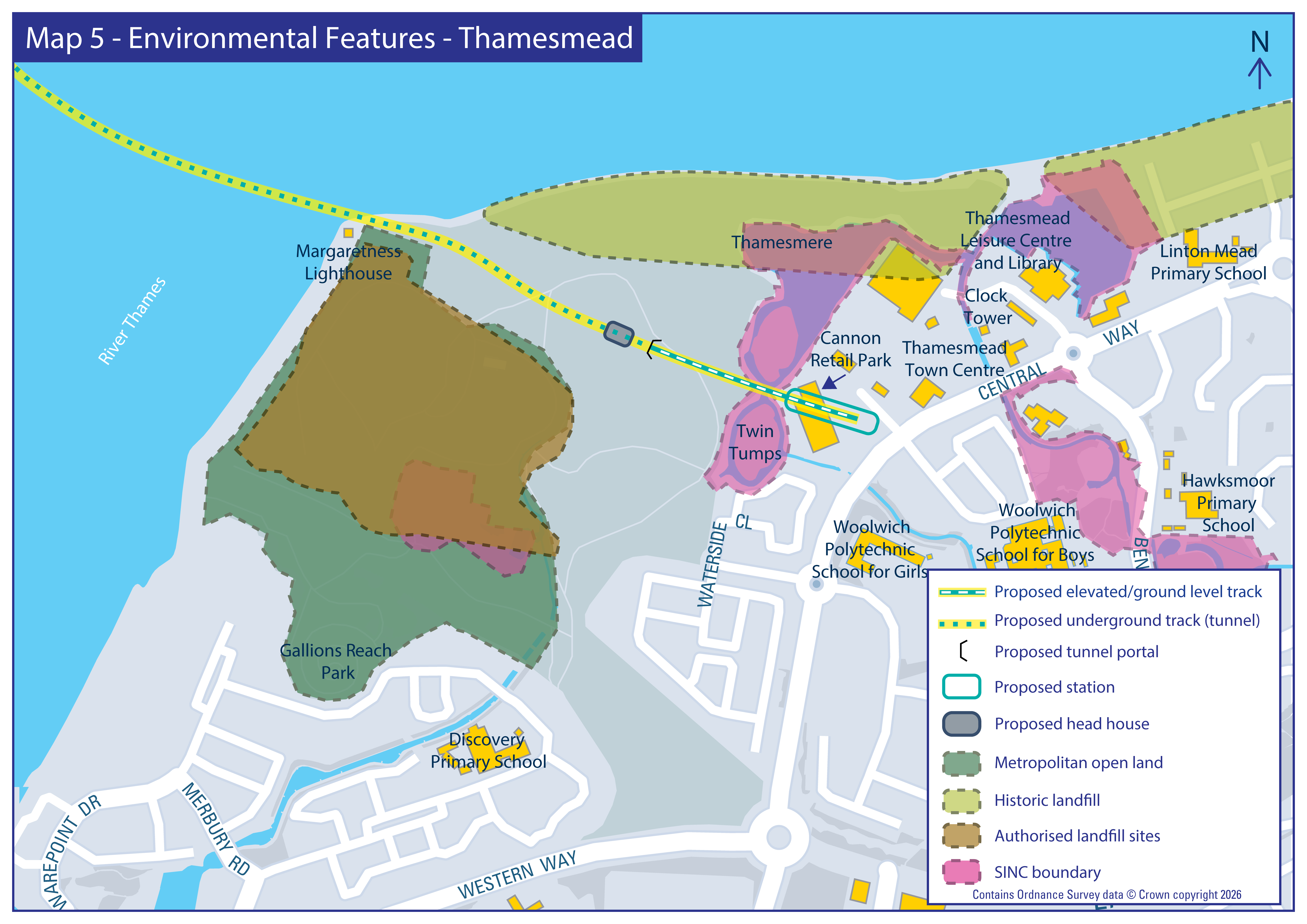
Important features include:
- Twin Tumps and Thamesmere, which are designated Sites of Importance for Nature Conservation, areas recognised by local authorities for their value to wildlife
- Thamesmead town centre and associated retail
- Residential areas and schools
The local environment in and around Thamesmead is influenced by:
- Road traffic from Central Way and local roads in and around Thamesmead town centre
- General neighbourhood residential activity and the town centre
- Noise levels are typical for a residential urban area and are lower than in places with heavy industry
- Air quality levels (associated with road transport) which are usually higher near major routes such as roads towards Woolwich and Abbey Wood
- Thamesmead also lies within the Royal Arsenal East Archaeological Priority Area, meaning there is a possibility of finding remains from earlier settlement or land use
Potential changes during construction
The project would try to minimise material movements by reusing excavated materials on site where possible and using recycled materials, helping to reduce the number of road‑based vehicle trips.
Community and people
Short‑term effects during construction may include:
- Introduction of additional heavy goods vehicle (HGV) traffic within the construction worksites and along Central Way and Eastern Way
- Visual changes near the elevated station and viaduct, including construction compounds, machinery, and temporary use of open space
- Temporary changes to walking routes and local connections, with some paths diverted or restricted
- Possible discovery of archaeological remains, which would require investigation and protection
- Temporary increases in noise, vibration, and air quality
- Short‑term disruption near community buildings, schools, shops, and local centres
Green environment (wildlife, habitats, and water)
Construction activity may affect:
- Wildlife and habitats identified within or nearby locally designated wildlife sites due to noise, lighting, and increased human activity
- Vegetation along haul routes, which may be exposed to dust or disturbance from vehicles
- Surface‑water systems, including lakes and drainage channels, which must be protected from polluted runoff or accidental spills
- Flood‑risk areas, where extra drainage or water‑storage measures may be needed
- Groundwater pathways, which may experience small, temporary changes due to piling or excavation
Brown environment (land, soil, and past uses)
Parts of Thamesmead were previously used for landfill and other historic activities. Therefore, it is possible that:
- Excavation may uncover contaminated soil, which would need careful and controlled handling and disposal
- Introduction of additional heavy‑vehicle movements may temporarily raise traffic levels and emissions
- Unexpected ground conditions may be discovered during earthworks, requiring additional mitigation
Effects during operation
Community and people
Once the DLR extension is open, it is expected to:
- Greatly improve transport connections, particularly for communities currently reliant on buses or private cars
- Support regeneration of the retail park and surrounding areas and support development at Thamesmead Waterfront
- Introduce new permanent structures, including the station and viaduct. These would change local views but are expected to become part of Thamesmead’s identity over time
- Generate operational noise, which would be regular and predictable, and much lower than construction noise
- Reduce car use, helping to improve local air quality
- Avoid further archaeological impacts, as major ground disturbance will have ended
Green environment
Longer term environmental effects are expected to be small and there is opportunity to create new areas which support local habitats:
- Wildlife is likely to adapt to regular and predictable train movements
- The elevated railway design helps protect ground‑level habitats by keeping most activity above them
- Shading beneath the viaduct may slightly affect local temperatures and plant growth (known as microclimate effects)
- Stormwater treatment systems will protect lakes and other surface‑water features from pollution
- Flood‑risk conditions should remain stable through well‑designed drainage systems
Brown environment
Once operational:
- Very little ground disturbance would occur
- Elevated structures reduce contact with soil, lowering environmental risk
- Only small amounts of waste will be generated through routine maintenance
- Long‑term environmental benefits are expected as more people switch from cars to public transport
Mitigation and management measures
Construction will follow a Code of Construction Practice which sets rules that controls how construction is carried out to reduce impacts and sets out the approach to environmental management of potential impacts.
Our Code of Construction Practice is currently in development but is likely to include:
- Require our contractors to achieve FORS accreditation and strictly adhere to Direct Vision Standards as part of our commitment to Vision Zero safety standards
- Require that are contractors are registered with the Considerate Constructors Scheme
- Controls on noise, dust, lighting, and traffic
- Archaeological investigation and recording
- Temporary wildlife‑friendly features and protection of existing vegetation
- Drainage and dewatering management
- Emergency response procedures
- Ongoing monitoring of noise, traffic, dust, and flood‑risk measures
We are also developing our plans for other environmental improvements for example, Biodiversity Net Gain, which aims to restore and enhance the environment to a level better than it currently exists.
Measures we could implement include:
- New planting of native species supporting healthy habitats and ecosystems
- Nest boxes and bat roosts
- Structures that support insects and other small wildlife
- Enhancing existing watercourses to support wider species such as birds.
The EIA will make a full assessment and confirm whether any significant environmental effects are likely and identify any specific suitable mitigation measures.
Consultation has concluded


