

Building the tunnel
The purpose of this page is to give more information about how we would build the tunnels to connect new stations in Beckton Riverside and Thamesmead.
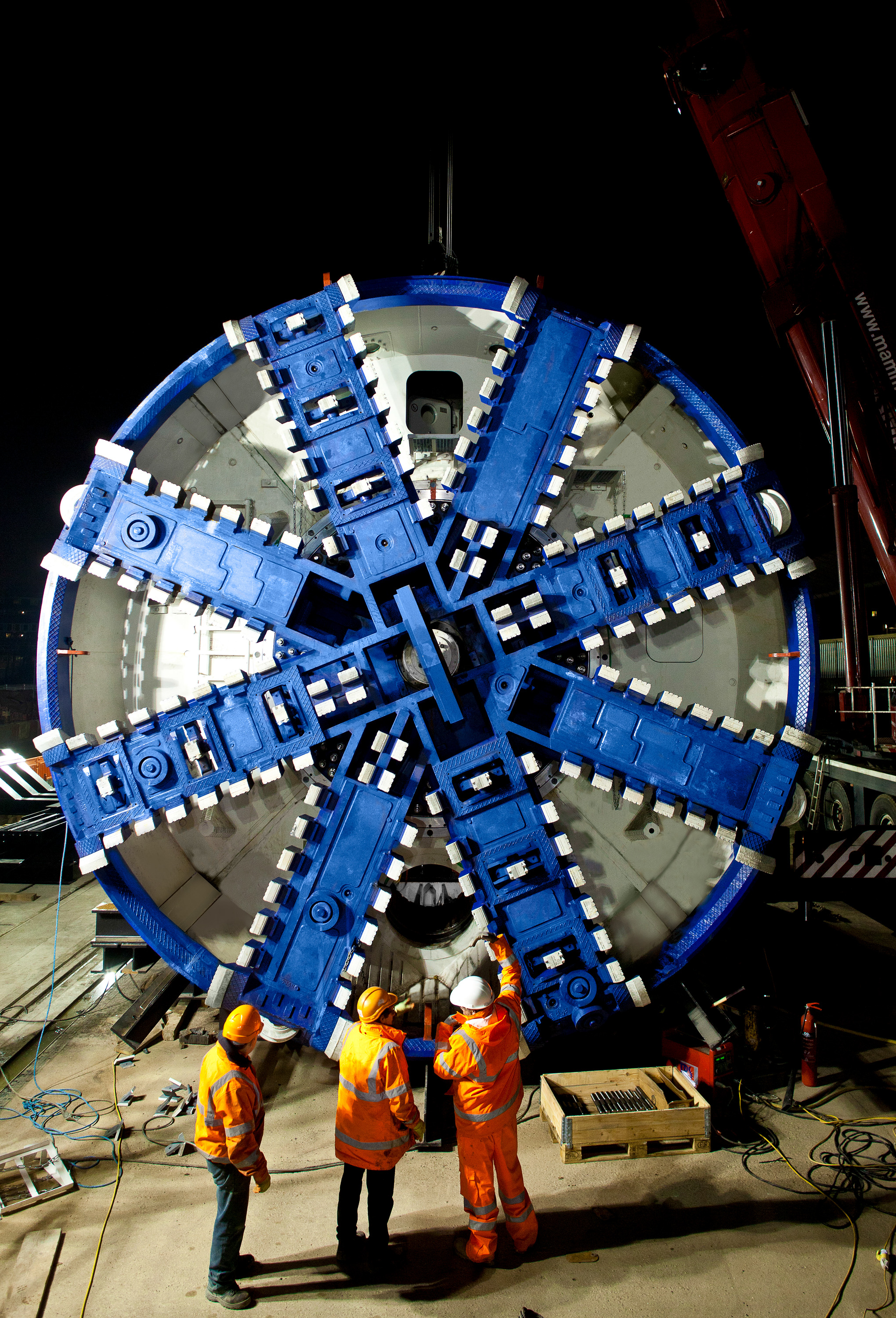 Example tunnel boring machine The new DLR extension would be built using the following types of tunnel construction:
-
Bored tunnels: Two deep tunnels created by a tunnel boring machine (TBM) that cuts through the ground. These would be used beneath the River Thames
-
Cut-and-cover tunnels: Shallower tunnel portals built by digging an open excavation from the surface, building the structure within it, and then covering it over again
- Cross passages: Tunnels dug by excavator within the bored tunnels which could be used should the tunnels need to be evacuated
Together, these methods allow the railway to run safely and connect smoothly from underground to the surface on both sides of the river. At this time, we expect all tunnelling activities, including construction of the cut-and-cover tunnels, to take around four years.
We would use a TBM to build the tunnel under the River Thames. A TBM is a very large machine that digs circular tunnels deep underground. It cuts through soil or rock, and removes the material, while maintaining the stability of the ground above, and builds the tunnel wall behind it as it progresses.
Launch and reception shafts
Before tunnelling can begin, two large vertical shafts must be built:
- A launch shaft at Beckton Riverside – where the TBM starts its journey digging the first tunnel and finishes the second tunnel
- A reception shaft at Thamesmead – where the TBM finishes the first tunnel and is turned around to begin the second tunnel.
These shafts are deep, reinforced structures that allow workers, machinery, and equipment to access the tunnel. The shafts would then be made permanent and would be used as access and emergency evacuation routes from the tunnels.
The shafts would be built in Worksites D and E, explained here.
Bored tunnels
We are proposing a twin‑bore tunnel, which means creating two separate circular tunnels running side by side beneath the River Thames. The tunnels would carry trains in opposite directions, which is the safest and most reliable way to run modern rail services. This approach is widely used across London’s rail network and provides the best balance of safety, efficiency and long‑term performance.
How the tunnel boring machine creates the two tunnel bores
- The machine is assembled inside the Beckton Riverside launch shaft
- It begins cutting its way beneath the River Thames
- The machine builds the tunnel wall behind it as it progresses on its route
- The first tunnel drive continues until the TBM reaches the reception shaft at Thamesmead
Once the TBM reaches Thamesmead, it is:
- Retrieved from the reception shaft
- Turned around
- Prepared for the return journey
- Driven back to Beckton Riverside to create the second tunnel
Additional tunnelling works
Short connecting tunnels, called cross-passages, would be built between the two main bores. These allow safe evacuation and maintenance access.
After the structural tunnels are completed, they would be fitted with:
- Track slab (the concrete base the rails sit on) and track
- Walkways for safe evacuation and maintenance access
- Drainage systems
- Power and ventilation equipment
- Signalling systems
A 24-hour tunnelling operation
TBMs must operate continuously, 24 hours a day. This is essential to:
- Maintain stable ground conditions
- Avoid the machine stopping and becoming stuck
- Ensure the tunnel advances smoothly and safely
As the tunnelling happens deep underground beneath the River Thames, it is not expected to cause disturbance. We would work to ensure that any necessary surface level work outside normal hours is kept to a minimum.
Managing excavated material
As the TBM advances, it produces excavated material. This would be carried back through the tunnel on conveyor belts and brought to the surface at the Beckton Riverside launch site for reuse or removal.
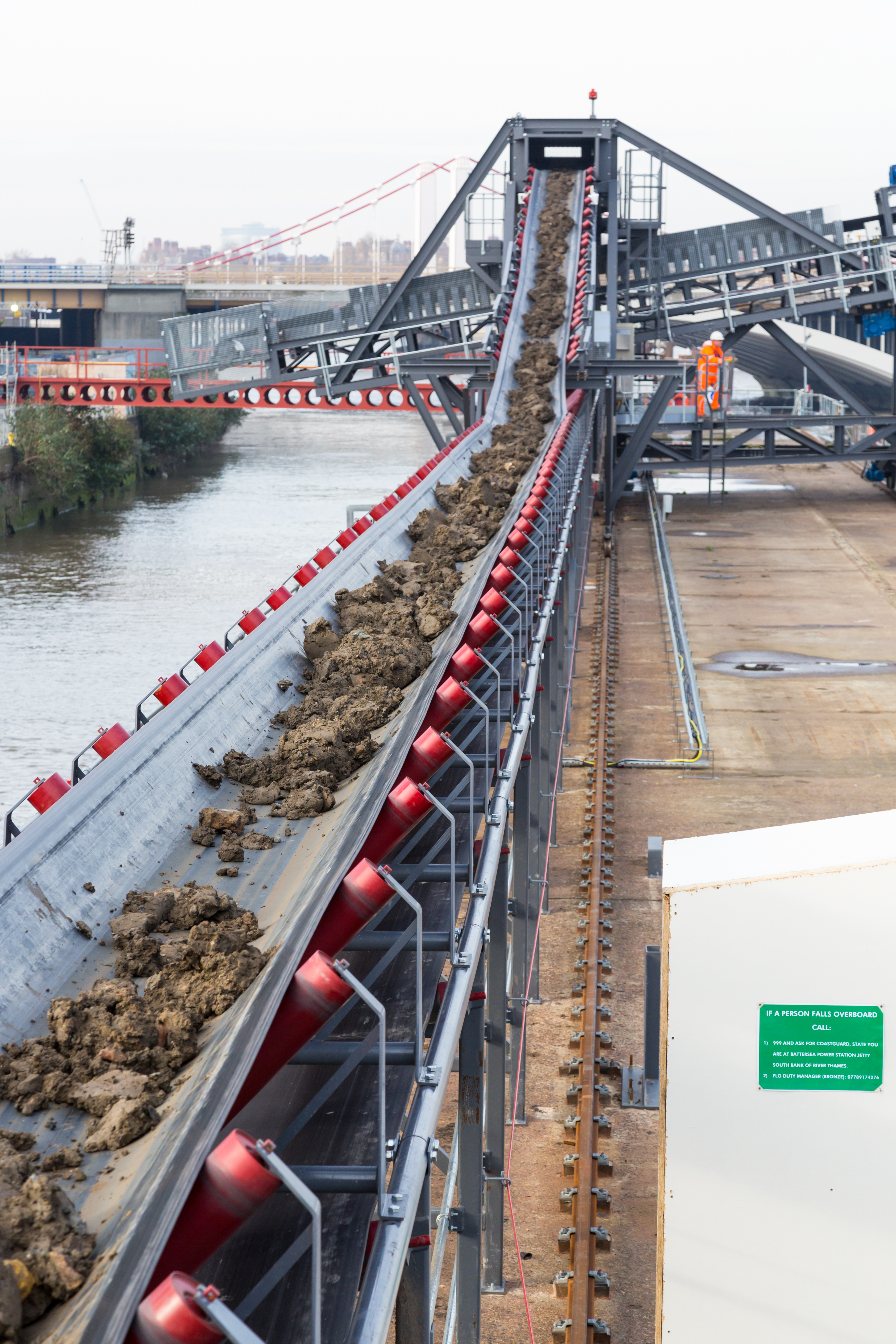 Example excavation conveyor belt
Impact on the river
The tunnels would be built deep below the River Thames, within a strong layer of chalk that is well suited for tunnelling. This approach has been used successfully for other major river crossings, including the DLR Woolwich Arsenal Extension, Silvertown tunnel and Crossrail.
All tunnelling would take place below the riverbed, and the river would remain open and undisturbed throughout construction. As chalk naturally contains water, specialist techniques would be used to control water and keep the tunnel stable while it is being dug.
The river would remain open and unaffected for boats, wildlife and river users throughout the construction period.
What else was considered
During the early stages of the project, several ways of crossing the River Thames were assessed.
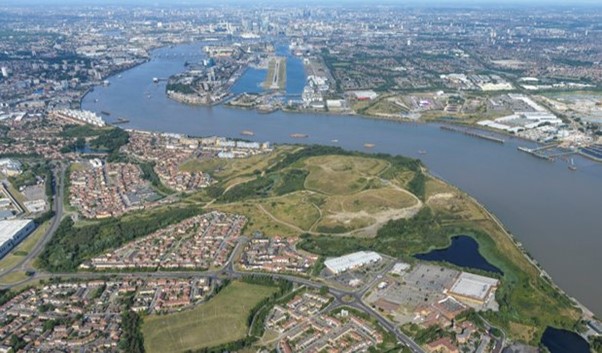 Aerial view of Beckton Riverside and Thamesmead A bridge was not suitable because the river is very wide at this point, needs to remain open to large ships, and any structure would have to stay below protected flight paths for London City Airport. All these constraints made a workable design extremely difficult. An immersed‑tube tunnel was also discounted as it would have caused more disruption during construction, cost more to build, and had significant negative impacts on the river and flood defences.
A twin-bored tunnel was chosen because it is safe and reliable and has already used successfully on projects such as previous DLR extensions, the Jubilee line extension, Crossrail and the Silvertown Tunnel.
Why Beckton Riverside was selected as the main tunnelling site
Beckton Riverside was chosen as the main site and launch point for the TBM because it is the most practical and least disruptive option.
The site has direct access to major roads, including the A1020, the A13, and the A406. These roads can safely handle heavy goods vehicles, and the large loads needed for tunnelling works. Accessing Thamesmead would require construction traffic to pass through residential areas, which would cause more disruption.
Beckton Riverside has easier access to the Port of Tilbury. This is a proven location for delivering large TBM components by river barge and so presents an opportunity to use the River Thames rather than the road network. Thamesmead has no suitable nearby dock, meaning deliveries would be longer and more complex.
Assembling and launching the TBM also requires a very large temporary power supply. Our initial work has shown that this supply would only be available in the Beckton area.
Beckton Riverside provides enough space for assembling the TBM, storing tunnel lining segments, handling and treating excavated material, and providing construction welfare facilities. The site is also well connected by public transport, with Gallions Reach DLR station and local shops and services close by. For these reasons, Beckton Riverside has been selected as the main tunnelling site and TBM launch location.
Cut-and-cover tunnels on both sides of the river
At both Beckton Riverside and Thamesmead, the bored tunnels need to connect to surface-level infrastructure, such as the new DLR stations, tracks at ground level, power, signalling, control systems, and maintenance access facilities. This is achieved using cut-and-cover tunnels and tunnel portals.
Cut‑and‑cover construction involves:
- Digging a trench from the surface
- Building the tunnel walls and roof within the excavation
- Backfilling the trench and reinstating the ground above
These areas are shallow enough for construction from the surface, creating a transition between the deep bored tunnels and surface‑level railway infrastructure.
.
Consultation has concluded


